Three Basic Scale Forms to Master

I just returned from a vacation that went by way too fast. As always, I was over ambitious when it came to planning out which pieces to learn but I did manage to re-work most of the Chaconne and will have many posts exploring what I’ve come across this time around.

In the meantime, the next post to help you develop a scale practice is here. Here are three moveable scale forms (major, harmonic minor, and melodic minor) covering three octaves starting on three different strings.

In general, focus on developing the skills you have worked on from the previous preparatory post in the more musical and sophisticated setting of scales: rest stroke, free stroke, string crossing, and very accurate transitioning from finger to finger. Use a metronome to track your progress and don’t be afraid to live in slow tempo world if it means you are becoming better and more consistent with your sound from note to note.

Rest-stroke fingerings: im, mi, ma, am, ia, ai, p, ami, ima, imam, amim, aimi

Free-stroke fingerings: im, mi, ma, am, ia, ai, pi, pm, pa, ami, ima, imam, amim, aimi, pmi, pami.

C Major Scale 3rd string major dia.jpgScale 4th string major dia.jpgScale 5th string major dia.jpg


C Harmonic MinorScale 3rd string har minor dia.jpgScale 4th string har minor dia.jpgScale 5th string har minor dia.jpg


C Melodic MinorScale 3rd string mel minor dia.jpgScale 4th string mel minor dia.jpgScale 5th string mel minor dia.jpg


Stay tuned (!) for the 3rd installment related to developing your scale practice where I’ll go through other scale forms.


Preparatory Work for Scales

During the summer months when it seems like there are extra hours in the day, I like to augment my practice by spending a lot more time with some intensive technique exploration and then learning new repertoire where I can experience the fruits of my labor. I remember coming across a sentence in Philip Hii’s writings essentially claiming that break-throughs rarely occur in the first few hours of practice. I agree wholeheartedly! And, as many of you could probably attest after practicing between the hours of 11 PM to 4 AM when the world is silent, break-throughs are not so often sought as just magically appear. So in this spirit, set aside a chunk of hours, grab some tea or coffee, and explore the next sequence of preparatory movements for scales.

Focus on the following key points:

1) Practice perfect alternation – As the finger performing the stroke moves towards its resting point, the next finger should release from its resting point to prepare the next stroke.

2) Keep everything relaxed – The only energy used is in the stroke, once this is performed the finger should release all energy and tension. In the best case scenario, the tension of the finger is released as the alternating finger exerts energy on the next stroke.

3) If you are still developing a technical base, spend more time on the basics – im, ma, ia and finger alternation with p are the more important fingerings to develop as all the others contain these basic movements.

Spend as much time within each step or rhythm to achieve improved tone consistency, stroke efficiency, rhythmic precision, and perhaps, speed. Use the 3rd string as a starting point before exploring other strings. If your nails wear easily, protect them with packing tape or keep most of your practice relegated to the first three strings. And, don’t forget to use your friend the metronome!

Rest Stroke or Apoyando

Step 1

Develop rest-stroke fingerings: im, mi, ma, am, ia, ai, p, ami, ima, imam, amim, aimi.

Scale 3 rh scale prep 1a small.jpg

Step 2

Develop string-crossing: im, mi, ma, am, ia, ai.

a)Scale 3 rh scale prep 1a1small.jpg
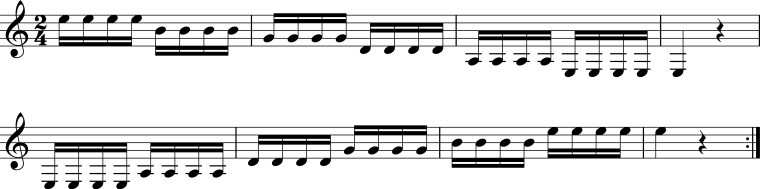
b)Scale 3 rh scale prep 1a2small.jpg

Step 3

Apply fingerings to simple coordination movements.

Scale 3 rh scale prep 3 small.jpg

Free Stroke or Tirando

Step 1

Develop free-stroke fingerings: im, mi, ma, am, ia, ai, pi, pm, pa, ami, ima, imam, amim, aimi, pmi, pami.

Scale 3 rh scale prep 1a small.jpg

Step 2

Develop string crossing: im, mi, ma, am, ia, ai, pi, pm, pa.

a)Scale 3 rh scale prep 1a1small.jpg
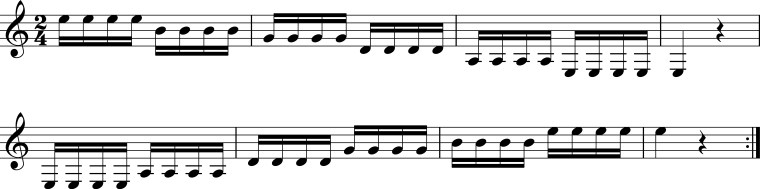
b)Scale 3 rh scale prep 1a2small.jpg

Step 3

Apply fingerings to simple coordination movements.

Scale 3 rh scale prep 3 small.jpg

Bring It All Together

 With a good chunk of time spent on the sequences above, you may be excited to test out the well-oiled machinery of your hands on scale forms and your repertoire. If you are looking for scale forms, stay tuned, as I plan to explore this in the next few posts.

This is Classical Guitar and Aural Refocus

As I plan out the next stages/posts for the blog I thought I’d give a shout out to Canadian classical guitarist, Bradford Werner’s great site www.thisisclassicalguitar.com. He covers so much: from reviews to lessons to a great selection of videos. He published a recent article I wrote on a concept I’ve found to really help me break through practice plateaus. Check it out: Aural Refocus Article.


Marcin Dylla and Carcassi Etude 7

I just stumbled across this video of phenomenal guitarist Marcin Dylla talking about Carcassi’s Etude 7. The real treat for students is that he plays it at the end of the video and manages to raise it from the status of a mere etude to a mini-masterpiece.

Right Hand Technical Workout Part 2

Here is the second installment of our right hand technique series. After a solid warmup of the larger muscle groups and gross motor skills in our right hand through chords and rasgueado (see Part 1), we’ll start building movements in the right hand from two finger movements up to four finger movements.

To start we’ll use movements involving the thumb with one other finger (pi, pm, pa) and movements involving the thumb with two other finger movements (pim, pmi, pma, pam, pia, pai). The primary goals with the following drills are to develop a strong sense of how the fingers fall across the strings which will reinforce our default right hand position and to develop a strong sense of independence from finger to finger (i.e. the movement of one finger or stroke should not displace the hand from this default position).

Step 1 – Thumb with one finger movements (pi, pm, pa)

The fingers of the right hand not involved in the movement should passively rest by very lightly touching their respective string. If this is too difficult at first, have them float as close as possible above their respective string (p=4, i=3, m=2, a=1).

right hand pi 2.jpg

right hand pm 2.jpg

right hand pa 2.jpg

Step 2 – Proceed to alternation

right hand pi 2.jpg

right hand pm 1.jpg

right hand pa 1.jpg

Step 3 – Proceed to work on the following thumb with two finger movements (pim, pmi, pma, pam, pia, pai). Note that each line contains six different movements to develop.

right hand pim 1.jpg

right hand pma 1.jpg

right hand pia 1.jpg

That should keep you all busy! Stay tuned to Part 3.

Right Hand Technical Workout Part 1

Just like in our Left Hand Technical Workout, I’m going to break this post into a few parts. This first part focuses on developing the macro movement of the hand as a unit.

Right Hand Movements

For all of the following movements, begin with the right hand positioned over strings 4, 3, 2, 1 with fingers p, i, m, a, respectively. Later, to expand into tremolo movements, p can remain on a different string and i, m, a can be used on the same string.

This part of the workout for the right hand involvies larger gross-motor skill requiring movements: chords and rasgueados.

Go through all fingerings for each movement.

Step 1

Chordal Movements – pima, pim a, pi ma, pma i, pm ia, pia m, pa im

Groups of fingers that are underlined move together and alternate with the next finger/fingers. Below is an example of pim a. I tend to use a simple scale of thirds or if you are craving dissonance, a diminished 7th chord (think Villa Lobos) as I ascend and descend the fretboard.

right hand chord 1.jpg

Focus on keeping the right hand relaxed but still. All movement must originate from the knuckles as if lightly closing your fist. I really have to get some short videos demos of this stuff…

Step 2

Rasgueado movements – cami, amii, pai, camii, im mi

For the movements below, rest the thumb (p) on string 5 when not using it in the pattern. Movement should originate from the knuckles outwards. Time to develop those flexors. Don’t overdo it though!

right hand rasgueado.jpg

Stay tuned for part 2!

Left Hand Technical Workout – Part 3

To conclude the left hand base building stage, we’ll expand our practice routine to include three finger movements and some four finger movements. While developing four finger movements is beneficial for overall functionality of the left hand fingers, three finger movements occur with a lot more prevalence in repertoire so I would suggest focusing on those first.

As in the previous base building workouts for the left hand, proceed through the steps sequentially.

Three Finger Movements – 124, 421, 134, 431, 123, 321, 234, 432

Four Finger Movements – 1234, 4321 (obviously, there are many more possibilities but I would argue that these two are the most important)

Step 1 – Start movements without slurs (example using 124)

slur124 no slur.jpg

For the right hand, using im either free stroke or light rest stroke is fine. Using thumb (p) throughout is fine as well. Keep in mind the focus should be on the deliberate and precise placement of the left hand fingers. Do not complicate things with nifty right hand fingerings. The right hand technical workouts are coming soon!

Step 2 – Incorporate slurs (examples using 124 and 1234)

slur124.jpgslur 1234.jpg

Step 3 – Build endurance

slur124 endurance.jpg

Explore these movements in several positions and you should be on your way to building a strong technical foundation to back your interpretations.

In the next installment, we’ll work on methods to build on this foundation to develop speed, flexibility, and finger independence. Stay tuned!

Left Hand Technical Workout – Part 2

Assuming the previous workout has had positive effect on your control, accuracy, and finger strength, it’s time to go a bit further. Now we’re going to work on the following two-pair and compound finger movements following the same steps we took in Part 1.

Two Pair – 12 34, 43 21, 13 24, 42 31, 14 23, 32 41

Compound – 121, 212, 232, 323, 343, 434, 131, 313, 242, 424, 141, 414

Step 1 – Start all movements without slurs (example using 12 34 and 121)

slur1234 no slur.jpg

slur121 no slur.jpg

Step 2 – Incorporate slurs

slur1234.jpgslur121.jpg

Step 3 – Build endurance

slur 2121.jpg

Stay tuned for Part 3.

Left Hand Technical Workout – Part 1


I am currently working on a comprehensive technique manual ranging from base building to many advanced practice techniques. The theme for the next few posts will center around developing a strong technique base through a daily routine. We’ll start with some basic movements most students could stand to refine.

Complete steps 1-3 with all of the following left hand finger combinations. It is crucial during base building to focus on clarity, efficiency, and accuracy of both sound and movement.

Single Finger Movements: 01, 10, 02, 20, 03, 30, 04, 40

Single Pair Finger Movements: 12, 21, 23, 32, 34, 43, 13, 31, 24, 42, 14, 41

Step 1 – Perform all movements without slurs (example below using 01 and 10)

slur 10 a no slur.jpg

Step 2 – Perform all movements with slurs (example below using 01 and 10)

slur 10.jpg

Step 3 – Build endurance by extending the time on each string (example below using 12 and 21)

slur 12 p3.jpg

Go very slowly. Listen very carefully. Do several repetitions. Explore various positions.

Try going through this every day for 2-3 weeks. Part 2 coming soon.

Sloppy Left Hand Fingers

Hopefully, as an aspiring guitarist, the principle of precisely pinching frets with your fingertips has been engrained and you now know that it is very difficult to play well without putting this principle into practice. From slurs to counterpoint, training left hand fingers to place carefully insures the likelihood that our notes will emerge clearly from the guitar. But, as any investigative and intellectually-oriented student will discover, there are many cases where sloppy, finger pad pinching would prove the exception to the rule.

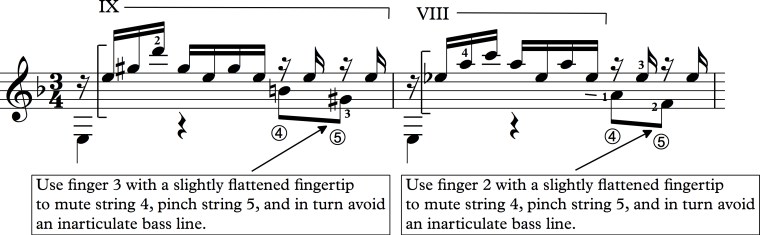
One such case would be when reaching for a bass note while playing or holding voices on the higher strings. If there are a few strings between the bass note and the voices being held, flattening the finger slightly while reaching will relax the hand more so than struggling to arch the fingertip into place.

Another case builds on this idea, what if you could use the flattened finger to silence a note on a neighboring string while simultaneously playing a note to achieve the correct musical intent of the composer or to maintain the integrity of a bass line? I’ve mentioned Bach’s Prelude in D Minor BWV999 before as a great piece to study many aspects of left hand technique so I will use a two measures from it as an example.

BWV999 Sloppy Left Hand.jpg

I’m hoping to post my edition of BWV999 soon with more pointers but for now, try to find places in your repertoire where it would be advantageous to not pinch so perfectly!