
Something you do not hear on guitar much is Beethoven! Finnish guitarist Patrik Kleemola recorded a wonderful video of Francisco Tárrega’s arrangement of the Adagio Cantabile from Beethoven’s Sonata No. 8, Op. 13, Pathetique. It is beautifully played, and both the audio and video are great. Enjoy.
Author: Leo Garcia
An award-winning classical guitarist, author, educator, founder of KinderGuitar and Six String Journal. Other interests: nutrition, running, yoga, hiking, reading.
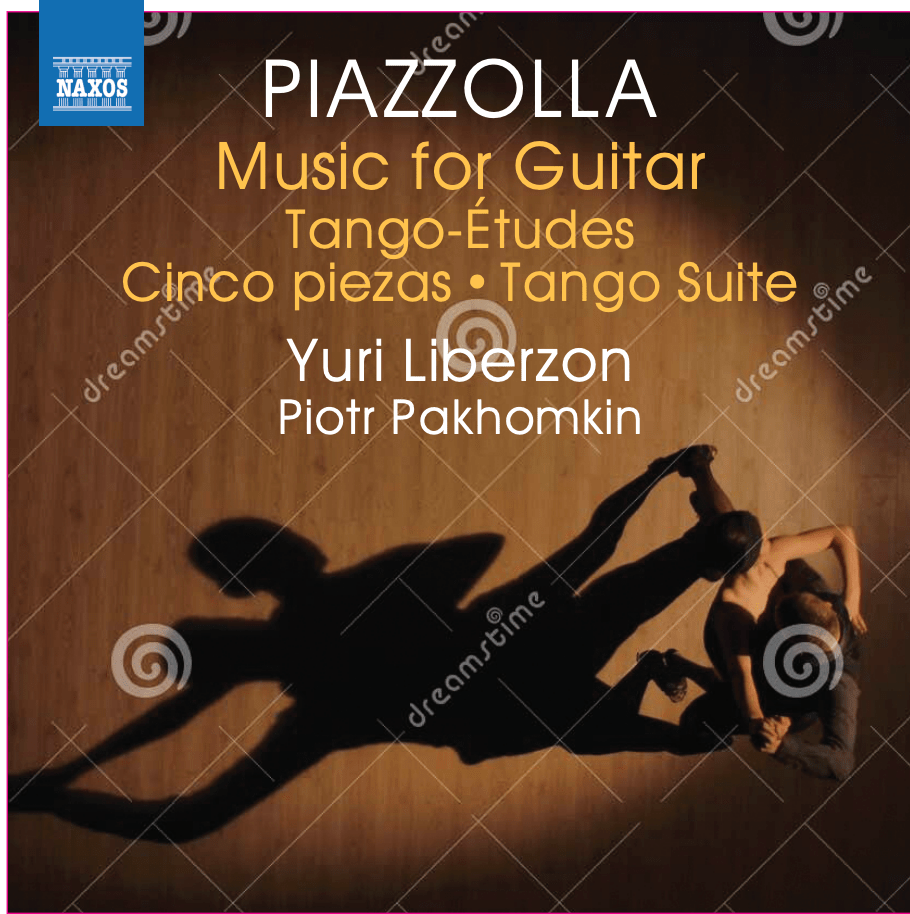
Review of Yuri Liberzon’s Upcoming Piazzolla Release!
Piazzolla, A.: Music for Guitar, Yuri Liberzon with Piotr Pakhomkin (Naxos)
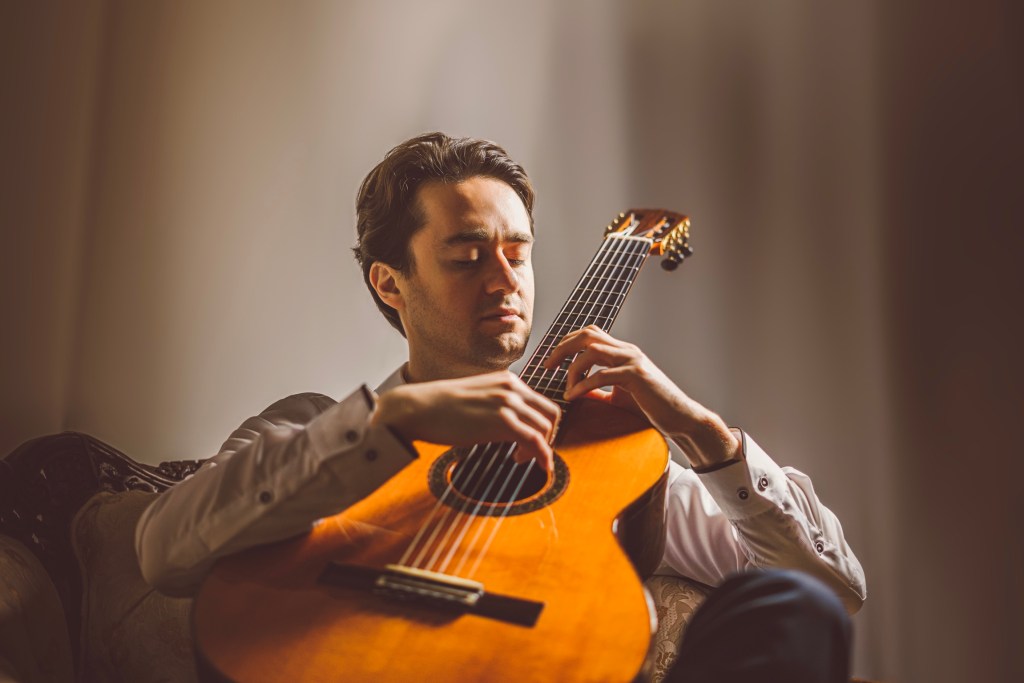
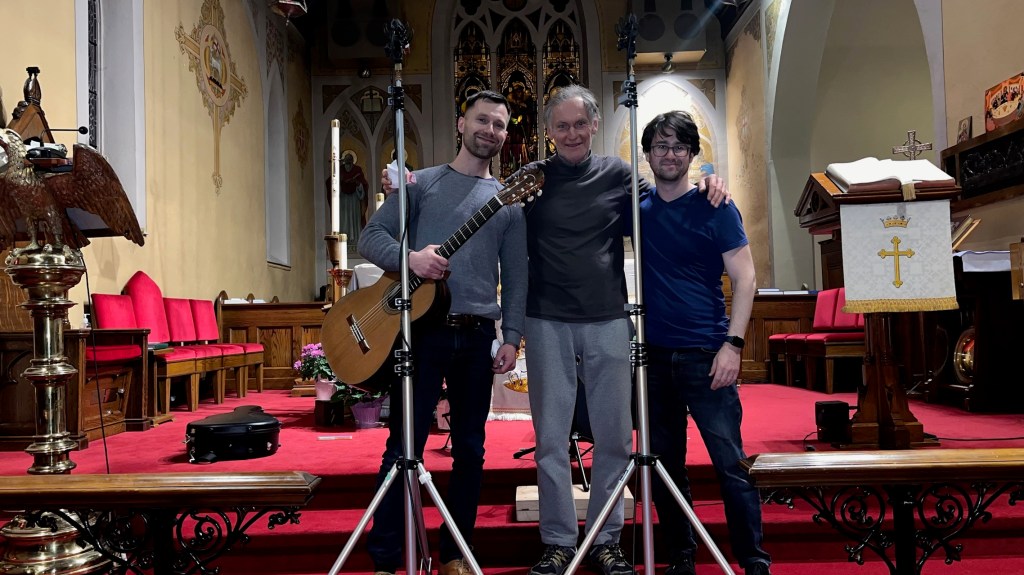
Yuri Liberzon’s upcoming release of a recording devoted entirely to the music of Astor Piazzolla is wonderful. It was recorded in April 2023 for the NAXOS label and was produced and engineered by guitar legend Norbert Kraft.
Astor Piazzolla’s Tango Suite for two guitars opens the program and sets the high standard one has come to expect from Yuri’s recordings. The suite is the only work where fellow virtuoso guitarist Piotr Pakhomkin, who flew in from Europe to record, joins Yuri. Having heard the famous recording of the Assads, for whom the piece was written, I can’t help but compare a bit. Yuri and Piotr take a bit of a more introspective journey through the piece, playing sections at a measured pace and always paying attention to balance and phrasing. The tempo for the third movement comes across as a bit slow, but it does not lack intensity. This made it seem like I was hearing the piece for the first time.
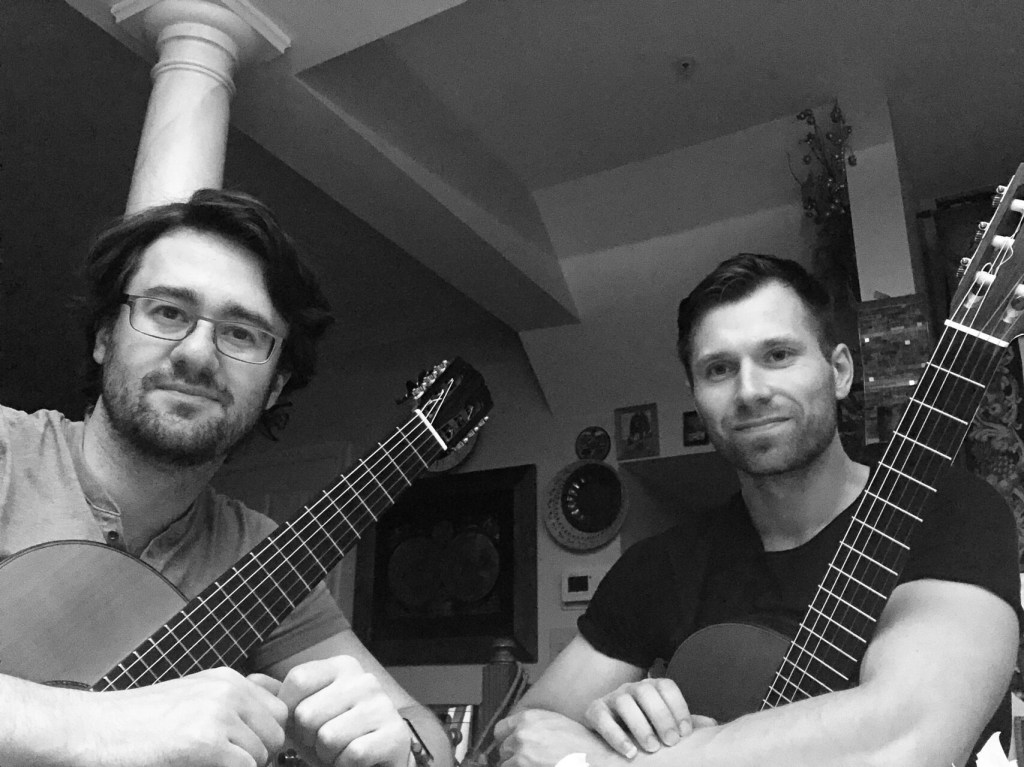
The arrangements of Oblivion (arr. Liberzon) and Muerte del Ángel (arr. Brouwer) really capture the essence of these pieces. Yuri plays both of these pieces with the musical freedom of an experienced performer. Despite the demanding counterpoint in Muerte del Ángel, the drive and intense pace are relentless, giving it Piazzolla’s soul squeezing pulse.
Perhaps the highlight of the recording is the refreshing and meticulous interpretation of the Cinco Piezas (Campero, Romántico, Acentuado, Tristón, Compadre). This is the only solo work Piazzolla wrote for the guitar, and despite the score’s visual simplicity, it demands the highest level of playing to pull off with such finesse. To experience fully what Yuri is capable of on the guitar, listen to how Tristón’s incessant accompaniment is magically played with its slowly unwinding harmonies while the melodic line floats above like bells in the clouds. And Compadre, played with Yuri’s signature understated intensity, will make you close your eyes and nod your head in agreement as you listen along.
And to wrap up the recording, Yuri has chosen Manuel Barrueco’s arrangement of the Tango Etudes. Again, looking at the score is deceiving. Originally written for the flute, one would think these etudes would translate physically to the guitar. But they are likely the most technically demanding pieces on the recording, and yet Yuri plays them in a way that sounds seasoned and comfortable.
I’ve heard Yuri interpret Piazzolla’s music over the years, and his relationship with the composer has not been static; it has evolved in depth and maturity. What strikes me most about the recording as a whole is the quality of the playing, the recorded sound, and the scope of the project. They, like the way Yuri juggles the compelling counterpoint and driving rhythms in Piazzolla’s music, are finely balanced into a perfect musical experience. So all you have to do, as Enrique Fernández wrote in the liner notes to Piazzolla’s recording Hora Zero, is, “Listen up. And suffer, m*ther!%^&er, this is the tango.”
A Curated List of Recent Recordings: Villa-Lobos Complete Works
As students begin to get serious about developing their concert repertoire, I like to recommend recordings to study and listen to with the score. So instead of scribbling on their score, I thought I would start to post suggestions on Six String Journal.
This week, I’ll suggest a few recordings of the works of Heitor Villa-Lobos. Villa-Lobos’s Five Preludes, Twelve Etudes, Brazilian Suite, and his Choro Nº1 are some of the guitar’s most beloved solo repertoire. Villa-Lobos uses the guitar so indulgently and exploits resonance brilliantly.
Julian Bream, Manuel Barrueco, and Alvaro Pierri’s recordings of these works are wonderful. But there are other recordings that really stand out to me. The first and probably my favorite is Fabio Zanon’s recording of the complete works. Zanon’s playing is beautiful, his guitar sounds heavenly, and the engineering (I think it was the legendary John Taylor) is excellent.
Another great recording is Jose Antonio Escobar’s recording of the Five Preludes, 12 Etudes, and a Modihna. I love the sound of his guitar (Paco Santiago Marin XXX) and the recording is sonically perfect.
Here is a link to Alvaro Pierri’s recording of the Choro, Five Preludes and 12 Etudes. This recording made me listen to what can be done interpretively with these great works. Pierri has a special take on these.
And last for now, here is Norbert Kraft in a recording of the Twelve Etudes. Solid from the first note to the last.
Here are a few great videos of the Five Preludes.
I know I’ve left many videos and recordings out. There are so many. Any favorites that I missed?
Leonardo Garcia plays Mallorca by Isaac Albéniz
Here is a video I just recorded of Mallorca, one of my favorite pieces by Albéniz. I think it is one of the guitar repertoire’s most beautiful and evocative pieces, despite the fact that it was written for piano. It’s a relatively new piece for me, though I’ve grown up listening to it. When I first learned it, I worked from the editions of many guitarists (Andrés Segovia, Julian Bream, Rafael Andia, David Russell, Abel Carlevaro, and many others) and consulted the piano score. And, once there were too many scribbles on all those editions, I decided to create my own edition to suit my hands and taste. As always, it is a work in progress that I enjoy playing quite a bit.
Thanks for listening!
My edition: https://payhip.com/b/WjY3R
K A Z U H I T O Y A M A S H I T A
Since I first heard Kazuhito Yamashita through a cassette recording of his monumental transcription of Modest Mussorgsky’s Pictures at an Exhibition, I have been in awe of him. The intensity and virtuosity, completely unrivaled to this day, of his playing were enough to make anyone’s jaw drop (or fingers fall off). I then searched for and came across more of his recordings, like his complete Bach cycle of the lute suites, violin partitas and sonatas, and the cello suites; Castelnuovo-Tedesco’s Caprichos de Goya and concertos and quintet; and other mind-boggling transcriptions like Stravinsky’s Firebird Suite and Dvorak’s New World Symphony. Many years later, I was fortunate to hear him play live in San Francisco through the Omni Foundation’s amazing Dynamite Guitar Series.
Tonebase, the wonderful resource for classical guitarists, recently did a video on Kazuhito Yamashita, which I feel compelled to share with Six String Journal readers. And, I discovered through the video, that he released a re-mastered full-length recording of his legendary performance of Pictures at an Exhibition. If you have not heard of Kazuhito Yamashita, brace yourself.
And if you missed the interview of his talented daughter, Kanahi Yamashita, I did for Six String Journal readers, check it out!
Save 30% on a Tonebase subscription by using the Six String Journal coupon code and supporting our site at the same time! Coupon code: SSJ-30
The Best Guided Warm-Up for Your Left Hand, Part 4
Here is Part 4 of a new series of guided warm-ups for my students and Six String Journal readers. In these guided warm-ups, I’ll go through some of the most important drills to help you establish a good routine for warming up before practicing your repertoire.
So go grab your guitar and get comfortable. In this second video, I’ve set the metronome for quarter = 60. We’ll go through the third part of my go-to slur routine, which involves three and four-note slurs (124, 134, 123, 234, 1234). For the right hand, I simply use p for strings 6, 5, and 4, and then use i, m, and a for strings 3, 2, and 1. Follow along, stay aware of good form, stay relaxed, and stick with it until you can start to increase tempo with a good foundation.
If you’re a beginner, take it slowly and don’t wear your hand out. Pause occasionally for rest and let your hand catch up. It might help to just watch the first few minutes to get a sense of how it unfolds for the fingers.
The Best Guided Warm-Up for Your Left Hand, Part 3
I’m in the process of creating a new series of guided warm-ups for my students. Here is Part 3 for Six String Journal readers. In these guided warm-ups, I’ll go through some of the most important drills to help you establish a good routine for warming up before practicing your repertoire.
So go grab your guitar and get comfortable. In this second video, I’ve set the metronome for quarter = 60. We’ll go through the second part of my go-to slur routine, which involves compound slurs (121, 232, 343, 131, 242, 141). For the right hand, I simply use p for strings 6, 5, and 4, and then use i, m, and a for strings 3, 2, and 1. Follow along, stay aware of good form, stay relaxed, and stick with it until you can start to increase tempo with a good foundation.
If you’re a beginner, take it slowly and don’t wear your hand out. Pause occasionally for rest and let your hand catch up. It might help to just watch the first few minutes to get a sense of how it unfolds for the fingers.
The Best Guided Warm-Up for Your Left Hand, Part 2
I’m in the process of creating a new series of guided warm-ups for my students. Here is Part 2 for Six String Journal readers. In these guided warm-ups, I’ll go through some of the most important drills to help you establish a good routine for warming up before practicing your repertoire.
So go grab your guitar and get comfortable. In this second video, I’ve set the metronome for quarter = 60. We’ll go through the first part of my go-to slur routine. For the right hand, I simply use p for strings 6, 5, and 4, and then use i, m, and a for strings 3, 2, and 1. Follow along, stay aware of good form, stay relaxed, and stick with it until you can start to increase tempo with a good foundation.
If you’re a beginner, take it slowly and don’t wear your hand out. Pause occasionally for rest and let your hand catch up. It might help to just watch the first few minutes to get a sense of how it unfolds for the fingers.
New Publication: The Best of Six String Journal, Vol.1
Sometimes I just love having a printed copy or a pdf to read from on my iPad of a bunch of technique drills to work on instead of trying to remember everything. To that end, I just created a new publication with the most popular articles on technique in the first volume of The Best of Six String Journal. And to thank SSJ readers, here is a 50% off coupon for the first 25 copies sold: THE BEST OF SIX STRING JOURNAL.
Contents of Vol.1
Miracle Right Hand Warm-Up Sequence
Developing Coordination and stroke control
Want speedy scales?
Coordination and right-hand arpeggios
advanced left-hand training, part 1
left hand warm-ups: slurs, fixed fingers, open strings, and tunnels
pavel’s left-hand technique fun
a way of thinking of tremolo
Warm Up With Me!
I’m in the process of creating a new series of guided warm ups for my students. Here is part 1 for Six String Journal readers. In these guided warm ups, I’ll go through some of the most important drills to help you establish a good routine for warming up before practicing your repertoire.
So go grab your guitar and get comfortable. In this first video I’ve set the metronome for quarter = 60. We’ll string cross with single and pairs of fingers and go through a great slur routine with all the pairs of left hand fingers. For the right hand, I simply use p for strings 6, 5, and 4, and then use i, m, and a for strings 3, 2, and 1. Follow along, stay aware of good form, stay relaxed, and stick with it until you can start to increase tempo with a good foundation.
 Six String Journal