In the videos below, I go through a progression of movements in the right hand that lead to better control of both rest stroke and free stroke. Grab your guitar and follow along. Hope this helps!
I’ve been dying to capture the voice of the wonderful guitar Stefan Nitschke built for me this year. It is his interpretation of the guitar built by Hermann Hauser that Segovia played for many decades and now resides in the Metropolitan Museum of Art. Though I’ve only had it for a little over a month it is coming into its own quickly with a little encouragement of Segovia’s repertoire. : )
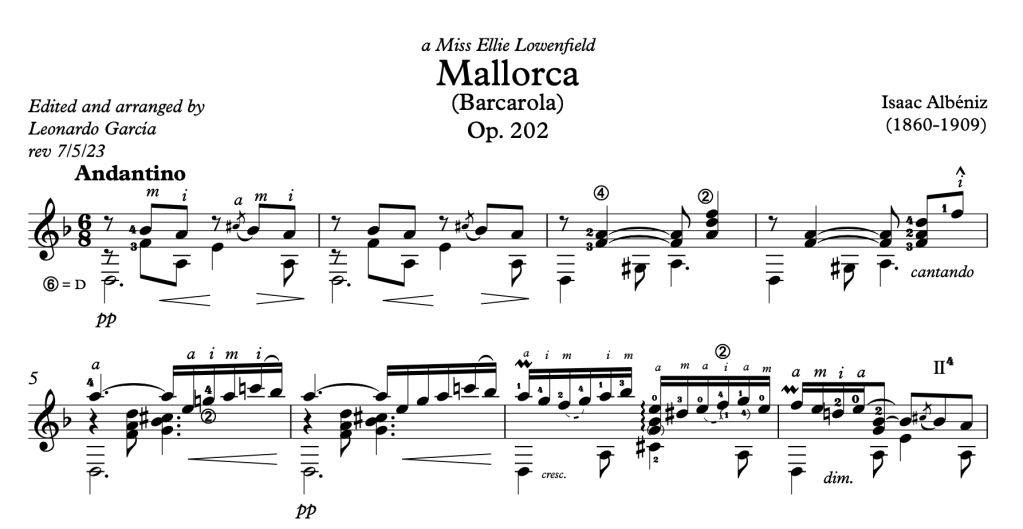
In this second half, I’m playing two of the most celebrated Spanish guitar pieces in the repertoire despite the fact that they are originally piano works.
I’ve been dying to capture the voice of the wonderful guitar Stefan Nitschke built for me this year. It is his interpretation of the guitar built by Hermann Hauser that Segovia played for many decades and now resides in the Metropolitan Museum of Art. Though I’ve only had it for a little over a month it is coming into its own quickly with a little encouragement of Segovia’s repertoire. : )
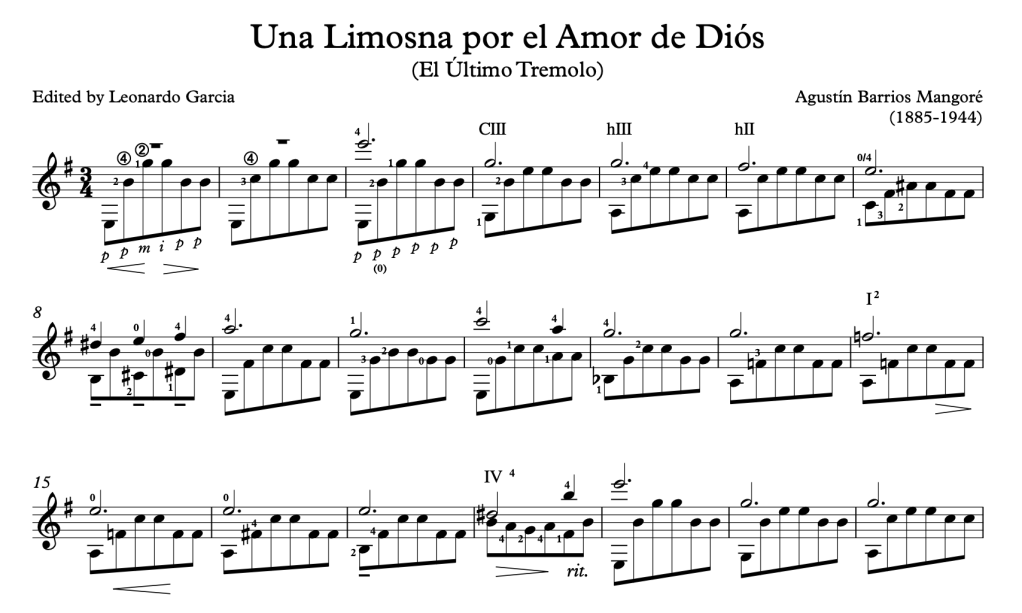
In the video below, I demonstrate four great ways to help your tremolo improve. Two of them I’ve outlined in my book Mastering Tremolo, which if you haven’t picked up, you should : ). But the last two I came across in Abel Carlevaro’s hand-written notes to himself in one of his editions of Agustín Barrios Mangoré’s Una limosna por el amor de Diós. Below you’ll find links to Mastering Tremolo and a NEW study score of Barrios’s Una limosna. Hope it helps.
For Sale. This is a brand new 2023 Jean Noel Lebreton Cedar Doubletop Concert Classical Guitar. Beautiful cedar/cedar doubletop with nomex and balsa. Elevated fingerboard, Schaller Grand Tuners. French polished top. Considered to be the best doubletop builder in France. Jean-Noël utilizes both balsa and nomex in his doubletops. This particular guitar is a great cedar doubletop: rich thick and powerful basses paired with warm and energetic trebles. The response of the instrument is excellent. Sound comes out immediately and is extremely well-balanced. What is wonderful about this guitar is that it reacts like a great traditional cedar guitar but has the extra energy and depth of a great doubletop. Action is low and easy to play. 650mm scale and 52mm at nut. Comes with the original EK case.
More Details:
Cedar (balsa/nomex doubletop), Indian Rosewood Back and Sides, Elevated neck/Ebony Fingerboard with additional 20th fret, Armrest, French Polish Top/cellulosic lacquer back and sides, 650mm/52mm. Comes with the case it shipped in (EK). Buyer pays $100 towards shipping (domestic US only). I’ll pay the balance. International shipping possible but extra. $8850
What arpeggio patterns would you practice if you had a limited amount of time? This is a question I receive from students often. Depending on your level, experience, time, repertoire, there are many answers. To keep it on the simpler side, I propose the following: pim , pmi, pima, pami, pimi, pmim, and finally pimami.
In the following three videos, I talk about how I like to practice these arpeggios. I go over how to warm up, when to use various planting techniques, what I think about as a I play them, what to listen for, how to expand some of them, and how to involve the left hand, hoping to clarify many questions that pop up in lessons.
Get your guitars out to try out some of the ideas as I demonstrate them and let me know if they help.
Over the years, I’ve heard many great guitarists interpret this piece. Fortunately, many of them have also published arrangements. So when I finally decided to learn it this summer, I consulted the piano score and read through as many guitar editions as I could get my hands on: Segovia, Pepe Romero, Abel Carlevaro, David Russell, Rafael Andia, Paulino Garcia Blanco, Stanley Yates, among a few others. I listened to many players as well: Julian Bream, Marcelo Kayath, Jose Antonio Escobar, Alicia de la Rocha, to name a few. There are many great performances on YouTube as well. Each edition and player has something interesting, some way of doing something that is clever or that works well. Some simplify difficult passages and some editions are more or less “guitaristic” than others. And all of those editions work well. But I cannot help trying to find my own way of doing it. The edition here is the way I play it now. You can find the score here on my payhip page.
Marcin Dylla playing Castelnuovo-Tedesco is always wonderful. Marcin Dylla playing Castelnuovo-Tedesco on a Torres is magical. Watching Marcin play is like watching a magician cast a spell. Here, the synergy of artist, music, and instrument truly conjures the ghosts of the past.