Six Tips to Master Tremolo

Over the years, I've posted several times about tremolo technique and even wrote the book Mastering Tremolo. Check it out if you haven't yet! Nevertheless, there are times when I decide to spend a lot of time working on certain techniques to brush up, improve, try new approaches, revisit, and revise. I did this with tremolo this week and though I may have mentioned them in my book, some stood out to me. Here are a few entries I wrote in my practice notes:

  1. The . . .

    Studio Content
    This content is restricted to Six String Journal Studio Members only. Join for access.

    Join the Studio

Four Essential Ways to Work on Tremolo

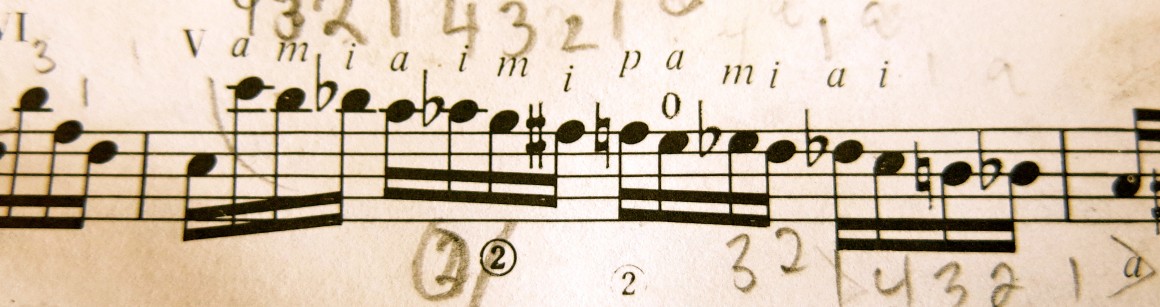
In the video below, I demonstrate four great ways to help your tremolo improve. Two of them I’ve outlined in my book Mastering Tremolo, which if you haven’t picked up, you should : ). But the last two I came across in Abel Carlevaro’s hand-written notes to himself in one of his editions of Agustín Barrios Mangoré’s Una limosna por el amor de Diós. Below you’ll find links to Mastering Tremolo and a NEW study score of Barrios’s Una limosna. Hope it helps.

Mastering Tremolo on Amazon

Mastering Tremolo on Podia

Una limosna por el amor de Diós (Agustín Barrios Mangoré) study score

Identifying Problems in Your Tremolo with Thomas Viloteau

This is a guest post from tonebase.


In Thomas Viloteau’s lesson on tremolo, he describes his method for working on and identifying irregularities in your tremolo. Your tremolo must serve the music you are playing and go beyond a technique. Otherwise, what should sound like beautiful music will instead sound like an exercise.

“The music is the most important thing. If you practice your tremolo as a technical thing, when you go to an actual piece it’s either not going to work or it’s going to make your music completely flat and lifeless.” – Thomas Viloteau

What is a good tremolo?

A good tremolo allows for three things:

  1. A wide range of dynamics (pianissimo to fortissimo)
  2. Different articulations
  3. A range of different tempos (accelerando, ritardando, rubato…)

How to spot problems in your tremolo?

Get a smartphone or device that can film video at a high frame rate and play it back in slow motion. It’s the only way to SEE what your fingers are doing at such a high speed and HEAR if you are actually picking as regularly as the beat of the metronome. This will help you learn what you are doing wrong.

Once you know what to fix, practice on open strings with a metronome. Make sure the technique you are practicing at a slow speed is not just “good enough” to pass at a slow tempo – it needs to work at full speed. Try experimenting with expressive variations to test your control over the technique. As soon as your technique is ready, start practicing your tremolo within the piece and NOT in isolation, as just a tremolo exercise. It will only be great if it is MUSICAL and works within the piece!

What are the different types of tremolo?

These three approaches offer different qualities and fit different musical contexts. Experiment to find more. For all the exercises below, use a p-a-m-i plucking pattern, though in some situations a two-finger tremolo may be preferable.

  1. Basic – Resting (a) ring finger on the string before plucking it to create stability for the hand and tell your fingers where the string is. Free stroke all the way through the string.
  2. Legato – Never resting (a) ring finger on the string. Works well for piano sections and when the accompaniment is on the top. It also works well for portamento because it doesn’t silence the string.
  3. Detached – Planting each finger firmly on the string before it plays. Mostly for use on the second or third strings. The finger comes more from ABOVE the string, in this technique, and may jump a little rather than remaining totally steady.

Bonus Tips

  1. Tremolo is much easier on the first string than the second because there is more range of motion for your fingers. Take advantage of this when you make your fingering
  2. Your forearm must be super relaxed and your hand very stable.
  3. To minimize the sound of your nail hitting the string, you must make sure that your flesh is hitting the string before the nail.
  4. It is easy for the middle finger to fall out of time. If this is happening, accent the middle finger’s plucking.

Watch Thomas Viloteau’s lessons and more on tonebase Guitar.

Two of the Best Tremolo Exercises

Studio Content
This content is restricted to Six String Journal Studio Members only. Join for access.

Join the Studio

How to Improve your Tremolo

Happy New Year! If your New Year’s resolution is to improve your tremolo, you are in luck!

The Bolton Guitar Series just posted its workshop on tremolo with David Russell. Before summarizing it for those of you who like to see the main points listed as a reference, I thought I’d repeat what I expressed in the recent post about David Russell’s ornamentation workshop: the generosity in sharing absolutely everything he knows about his journey with guitar in such an enthusiastic and articulate way is extremely inspiring. David Russell is a great teacher, even through zoom!

Here is the video of the tremolo workshop:

David Russell Tremolo Workshop Main Points

  1. Each finger/nail should feel and sound the same.
  2. Tremolo is a good diagnostic technique for other technical issues.
  3. Maintain a regular rhythm.
  4. Bass should be balanced. Gentle bass/medium or strong treble.
  5. Stiffness in the right hand fingers makes noise. Looseness in the right hand equals a less “clickly” sound. Straighter fingers also help with lessening the “clicky” sound of nails.
  6. The a finger introduces a new tremolo/melodic note and requires attention.
  7. Sympathetic motion between a and m can lead to rhythmic irregularities. Lengthen a finger duration to insure full value of note.
  8. Shift metronome beats to each finger when practicing to “think” with each finger and especially a.
  9. What you do musically with tremolo is at least as important as mechanical perfection.
  10. Practice contrasting Slow/fast, dark/bright, soft/loud practice.
  11. Certain pieces require slow tremolo, some require faster tremolo.

Tremolo pieces:

  1. Recuerdos de la Alhambra and Sueño (Francisco Tárrega)
  2. Zafra and Simancas from Castillos de España (Federico Moreno Torroba)
  3. Una limosna por el amor de Diós, Un sueño en la floresta, Contemplación, Canción de la Hilandera (Agustín Barrios Mangoré)
  4. Invocación y danza and Junto al Generalife (Joaquín Rodrigo)
  5. Reverie and Air Varié (Giulio Regondi)
  6. Now and Ever (Bejamin Verdery)
  7. Shenandoah (Robert Beaser)
  8. Capricho Diabolico (Mario Castelnuovo-Tedesco)
  9. Variations on Las Folias (Manuel Maria Ponce)
  10. Campanas del Alba (Regino Sainz de la Maza)

Tips from Questions and Answers:

  1. Play with energy and the necessary tension but more than that is wasted energy and effort. Poise and posture to maximize energy.
  2. Practice tremolo with two fingers (pimi, pmim, pama, pmam, etc…)
  3. Do not bounce hand!
  4. Planting a stops the tremolo. Join all the notes for a better tremolo.
  5. Try playing paaa tremolo to assess tone, movement of a.
  6. Finger movement remains mostly within the span of string space (i.e for tremolo on string 2, a, m and i do not extend beyond strings 1 or 3).
  7. Raise your expectations of yourself. Do not accept bad playing!

For more learning resources:

Mastering Tremolo for Classical Guitar

Active Practice Techniques to Improve Tremolo, Part 4

Studio Content
This content is restricted to Six String Journal Studio Members only. Join for access.

Join the Studio

Active Practice Techniques to Improve Tremolo, Part 2

Studio Content
This content is restricted to Six String Journal Studio Members only. Join for access.

Join the Studio

Active Practice Techniques to Improve Tremolo, Part 1

Studio Content
This content is restricted to Six String Journal Studio Members only. Join for access.

Join the Studio

Motivation from David Russell

Studio Content
This content is restricted to Six String Journal Studio Members only. Join for access.

Join the Studio