What do you call a dwarf who rides the subways of Paris?

A metronome should be your ally in the practice room. While it may seem like a cold, unforgiving taskmaster, it’s one of the most powerful tools you have for becoming a better guitarist and musician. Beyond simply keeping you in time, the metronome develops your internal pulse and reveals where your playing might be rushing or dragging. There is a lot of fun you can have with the metronome. Here are my favorite ways to use it when I’m practicing:
1. Gradual Tempo Building (“Clicking Up”)
Start at a comfortable tempo where you can play the passage cleanly. Slowly increase the tempo in small increments (2-10 bpm at a time) until you reach or even slightly surpass your target tempo. This method builds accuracy first, then speed.
2. Fewer Clicks, Longer Phrases
Keep the metronome at the same speed but reduce the number of clicks per bar—for example, setting it to click only on beats 1 and 3, or just on beat 1. This approach forces you to internalize the pulse and feel longer phrases instead of relying on every beat.
Metronome-Off Challenge
Set the metronome, play along to establish the tempo, then turn it off and continue playing. After a few bars or phrases, turn it back on to see if you stayed in time. This practice is excellent for developing your internal pulse.
4. Offbeat & Subdivision Clicks
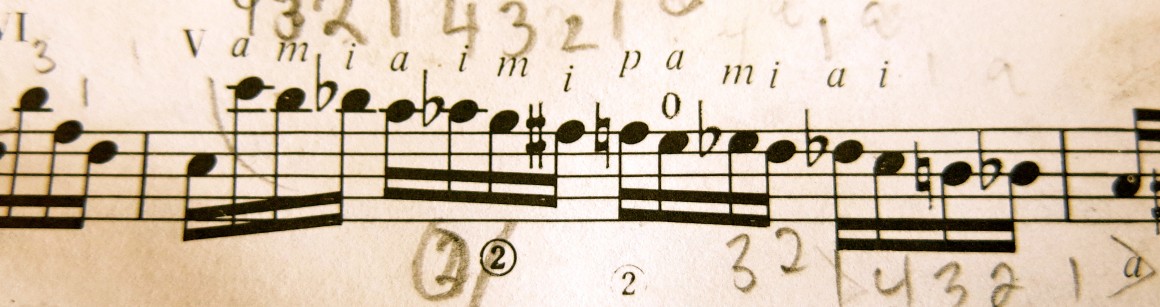
Instead of clicking on the downbeats, have the metronome click on the upbeats (the “and” of each beat) or on subdivisions (e.g., sixteenth notes in a fast passage). For perpetual motion pieces, such as a Bach Allegro, this approach keeps you honest and aids in maintaining rhythmic stability and precision.
Half-Time or Double-Time Feel
Set the metronome to half the tempo so it clicks only once every two beats (or every bar). Alternatively, set it to double the tempo so it clicks on every subdivision. Both methods challenge you to maintain a steady groove and avoid rushing.
Random Dropout Practice (Advanced)
Some modern metronome apps allow the click to drop out randomly. This feature forces you to maintain steady timing when the click disappears, which helps train your internal rhythm consistency.
Polyrhythmic Practice
Set the metronome to a different pulse than the meter you’re playing—for example, a 3:2 feel (triplets against duplets). This develops rhythmic independence and makes you far more rhythmically flexible.
Recommended Metronomes
My favorite old-school quartz metronome is the Seiko Quartz SQ50-V but here are a few more that I’ve used in the past.
- Tonal Energy Tuner (App)—combines metronome, tuner, and advanced rhythmic tools.
- Dr. Beat DB-90 (Boss)—classic, reliable, and feature-rich with multiple patterns.
- Metronome+ (App) is a helpful tool I have on my iPad because you can set tempo increases automatically. It is excellent for technique practice.
This post includes affiliate links. If you decide to use it, thank you—it helps keep this blog up and running.