Beyond the Basics: Repertoire Recommendations for Late Beginners and Young Classical Guitarists
As children move beyond the initial stages of learning the classical guitar, the world of repertoire opens up in beautiful and inspiring ways. At this transitional phase—when students are comfortable with foundational techniques and literacy—it’s crucial to provide them with material that both challenges and delights.
Over the years, I’ve found a handful of works that resonate especially well with late beginners and young players. These pieces not only support technical development but also deepen musical understanding and ignite artistic curiosity.
A few of my go-to resources include
Shawn Bell’s engaging pieces and literacy supplements, which help reinforce reading skills in a musically satisfying context.
Nikita Koshkin’s Etudes, which offer a special combination of imagination, texture, and humor—perfect for students ready to explore more expressive possibilities.
Tilman Hoppstock’s “Duets for Children and Teachers,” which are not only musically rich but also foster ensemble awareness and mentorship.
Carlo Domeniconi’s Preludes and Klangbild are shorter works that combine evocative soundscapes with accessible technique.
Simone Ianarelli’s Etudes, which are approachable yet musically rewarding, often introduce more contemporary harmonic language.
Leo Brouwer’s Etudes Simples and Nuevos Estudios Sencillos achieve a near-perfect balance between musical depth and technical growth.
The Royal Conservatory Series has carefully curated music that is organized by musical period and meticulously fingered.
And of course, Fernando Sor’s Etudes, timeless gems, remain some of the best pedagogical pieces in the classical guitar canon.
All of these resources are wonderful—but only after the student has developed strong foundational skills.
That’s where structured early pedagogy is so essential.
Over the last two and a half decades, I’ve dedicated myself to developing KinderGuitar, a child-centered curriculum specifically designed for young guitarists. It’s built around intentional scaffolding, sequencing, and musical engagement to set students up for long-term success—not just technically, but musically and emotionally.
Once students complete the core levels of the KinderGuitar curriculum, they’re remarkably well-equipped to approach the repertoire listed above with confidence. Their literacy is solid and their fingers are trained, but more importantly, they possess the building blocks for being musicians.
If you’re an educator who loves teaching children and is passionate about shaping the next generation of musicians, feel free to reach out to learn more about KinderGuitar program. KinderGuitar is slowly growing a small network of licensed teachers who believe that early guitar education can be as structured and joyful as early piano or violin instruction.
Over the years, I’ve explored countless practice resources—but these three consistently rise to the top. If you’re looking to deepen your progress on the classical guitar, these are well worth your time.
Molly Gebrian
The catchy title of Molly Gebrian’s book, Learn Faster, Perform Better, lays out science-backed methods of practicing that will help you become better at your instrument. Gebrian holds degrees in neuroscience and music, is a phenomenal violist, and is a faculty member at one of my alma maters, the New England Conservatory. Her book goes through the concepts of spaced practice, mental practice, attentional focus, variable practice, structured practice planning, and other topics that, if you have not learned in music school, you’ll be grateful to learn here.
Her YouTube channel is an invaluable resource. The videos are short, insightful, and actionable—perfect for classical guitar students looking to level up their technique and musical memory. You’ll find clear explanations, real-world examples, and bite-sized challenges that make her ideas easy to apply right away.
Tonebase
Tonebase has been publishing a wide variety of videos that I’ve found helpful. The videos by Eliot Fisk, Nigel North, and Paul O’Dette discussing various Bach suites are excellent. The videos where Marco Tamayo explains his approach to technique or where Rene Izquierdo goes through repertoire are so insightful that you’ll gain great nuggets of information to inspire you. However, what I found most useful this year were the videos Lukasz Kuropacsewski did on practicing. These are absolute gold because he not only answered many questions I’ve asked myself over the years, but the enthusiasm with which he delivers the advice makes you want to grab your guitar. If you have not seen these, the price of a subscription to Tonebase is well worth it. Use this code SSJ-30 for 30% off.
The Bulletproof Musician
The Bulletproof Musician, created by performance psychologist and Juilliard-trained violinist Dr. Noa Kageyama, is one of the most respected resources on the mental side of music performance. The site is packed with research-based articles, podcasts, and practical advice on topics like overcoming performance anxiety, effective practice techniques, building confidence, and performing under pressure. Drawing from psychology, neuroscience, and decades of performance experience, Dr. Kageyama translates complex ideas into clear, actionable strategies that musicians of all instruments and levels can apply.
While it isn’t guitar-specific, the insights are universally applicable to classical guitarists—especially given the instrument’s intimate, exposed nature and the mental demands of solo performance. Students can benefit greatly from articles on focus, memory, and managing nerves on stage.
This post includes an affiliate link. If you decide to use it, thank you—it helps keep this blog up and running.
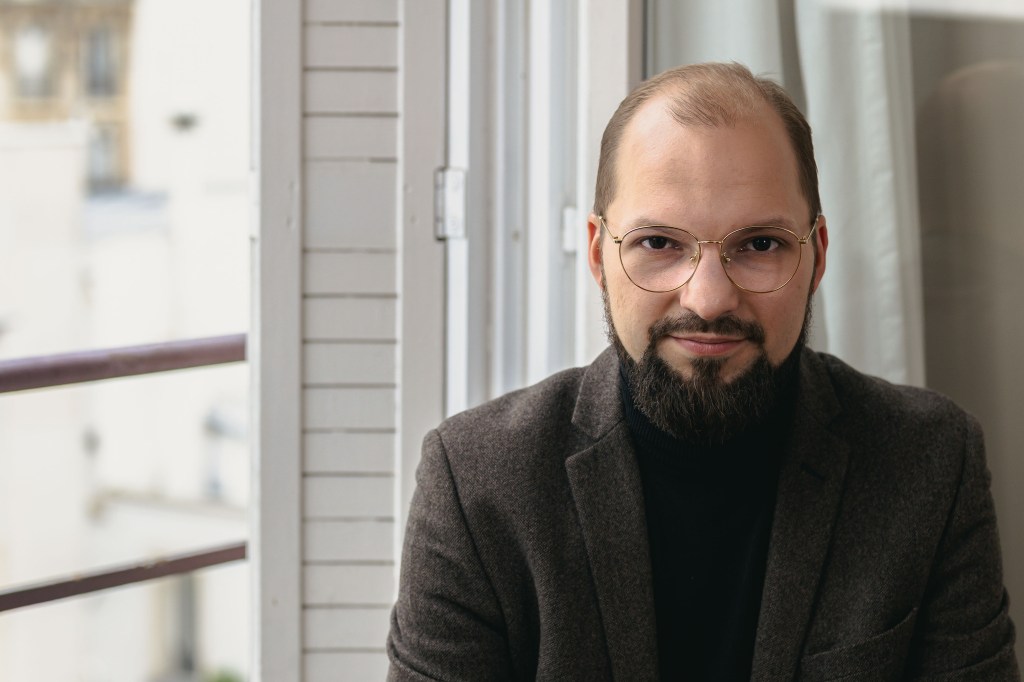
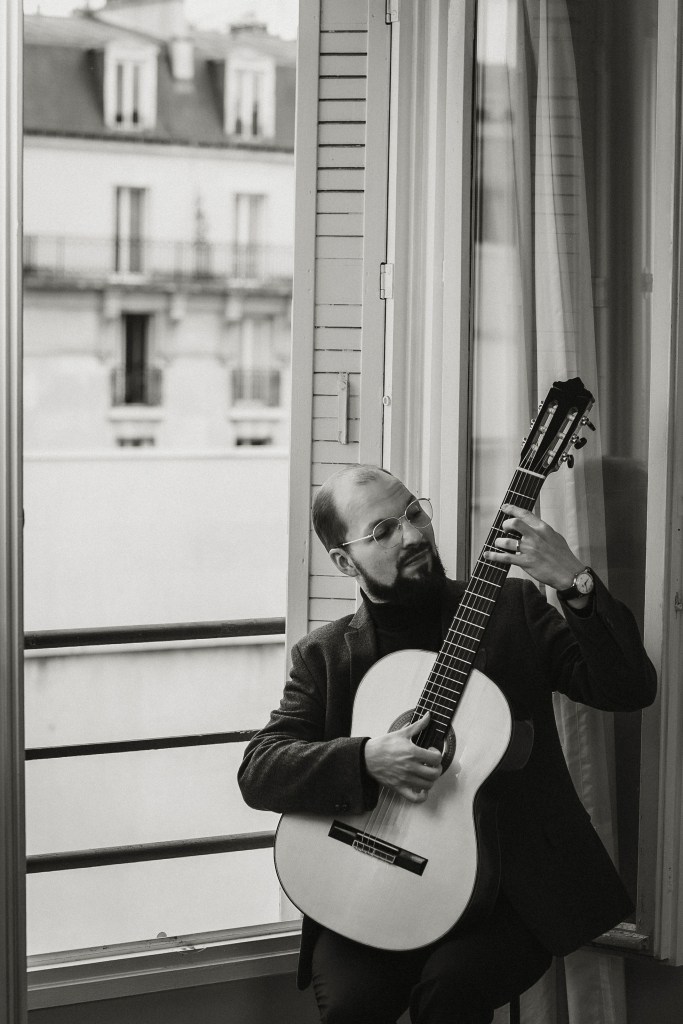
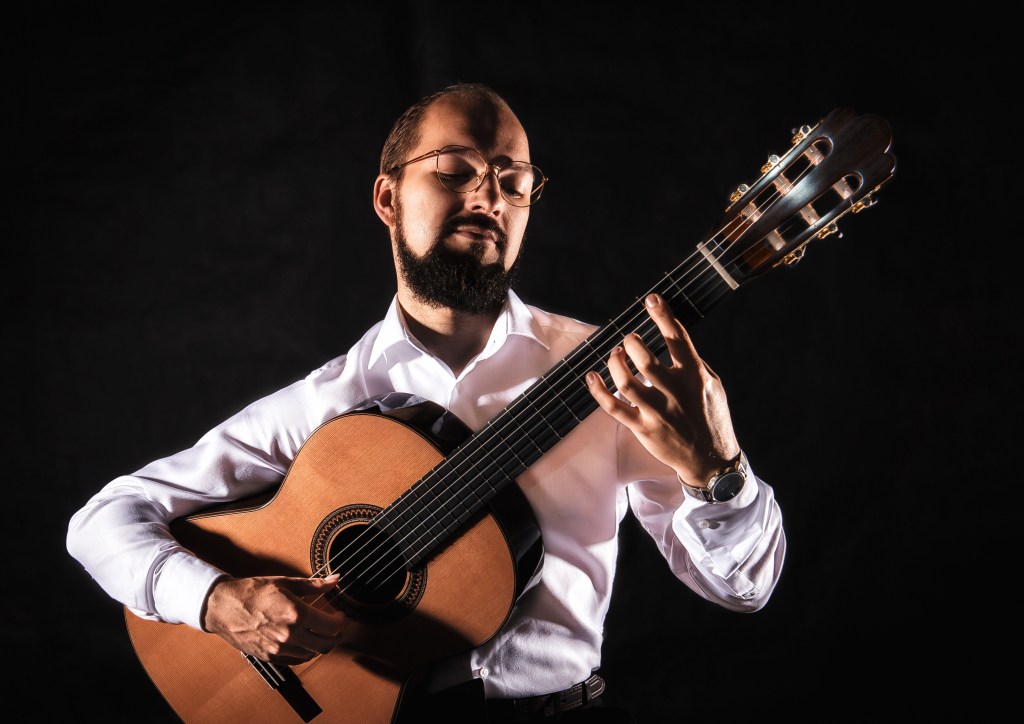
The Polish guitarist, Tomasz Radziszewski, has garnered a lot of attention recently for his brilliant performances and his dynamic interpretations. In addition to performing and teaching, Tomasz is passionate about personal growth and sharing his approach to practice. Between his busy schedule of performing, arranging, and practicing, he sat down with Six String Journal to share some of his discoveries on everything from practice to performing and some of his life philosophies. Enjoy.
When did you start playing, and why? What drew you to the guitar initially?
My journey with guitar was not love at first sight. I started to play at the age of 7. My mom signed me up for music school for guitar against my will. I wanted to be a pianist! We had a piano in the kindergarten and my hobby was to play some melodies by ear like Ode to Joy and others which I don’t really remember. But I was always passionate about music thanks to my father, who played in a local band on an acoustic bass guitar and a keyboard. Although he preferred some rock/metal or electronic music, I was always only into classical music. Of course, that changed over the years, but I have memories from when I was 6-10 years old and loving only Mozart and Beethoven. The other music, pop, jazz, rock, made me feel awkward as a child.
What repertoire do you enjoy playing the most?
Nowadays I am much more open. With years of discovering music I fell in love with many different kinds. If I am totally honest, I love to play film music the most of all. It’s both the joy of arranging and performing something really emotional. I love to perform what people know and can enjoy with me. I like to arrange pieces from different instruments to give the public my new vision of them. From the standard repertoire, I am really into baroque and classical music. Mostly Bach, Sor, and Giuliani. From the XX century, my absolute favorites are Villa-Lobos and Rodrigo, because they offer some nice harmonies. I am not so much into performing contemporary repertoire, although I compose myself and I’ve had a few compositions written for me.
What guitar or guitars do you perform on? Strings?
I like my guitars how I like my wines: perfectly aged and in great condition. I hardly ever like new instruments. In my small collection (that’s really too big word for five instruments, but I cannot find a better one) I have three old instruments: José Ramirez 1979, Salvador Ibañez ~1900 and Jerome Thibouville Lamy 1890 (romantic guitar from Mirecourt). The sound of those is so charming and yet so different, one from another. Ramirez is perfect for any kind of repertoire and allowing me to play with huge expression due to its volume and color range. The Ibañez is my absolute favorite for playing late romantic music (Tarrega, Barrios, Chopin). Lamy is wonderful for Sor, but also I really like it in baroque music, too.
I’ve played many kinds of strings in my life. I like different styles depending on the instrument and my mood, but now I’ve settled for Savarez Cantiga Premium Evolution. They give me a perfect balance of tension (1 string is nylon, the rest carbon), which cooperates perfectly with my Ramirez. They last really long and have this bright color. It’s also easier to keep intonation in high positions with the 2nd and 3rd carbon string (Ramirez has 664mm scale and it gets really crazy in high positions). Personally, I much prefer the color and vibration of nylon strings and I used D’addario EJ45 for their lovely tone but my hands get really sweaty sometimes and those strings did not last very long. I remember a few recording sessions when they were done after 3 hours (and I changed them just before playing). I also had a period using John Hope strings but I think this brand doesn’t exist anymore. Hopefully I’m mistaken, because those were also very nice.
Which guitarists/musicians have had the most influence on you?
1. Sergio Assad – the few classes with him changed not only how I play, but also who I want to be, how I want to shape my vision of music and how to listen to myself. He never says “play like this” or anything similar. He’s always asking and listening, looking for the best musical solutions. 2. Cassie Martin – she made me realize how important and beautiful the relationship with the public can be. I neglected that a lot before. Now it’s become the purpose of my playing. Cassie made me understand many more things, not only about music – she influenced my life the most by becoming my wife. It’s really wonderful to share passion and life with someone who is so passionate herself. 3. Łukasz Kuropaczewski – he motivated me to practice hard and helped me prove to myself that dreams come true. Without him I’d never achieve my present technical level 4. Ryszard Bałauszko – from him I learned that playing fast and loud is not the goal. He showed me how to play beautifully and how to operate with time in music. 5. Mateusz Kowalski – he showed me how to take risks and why it is important. Also, I learned totally unconventional solutions for fingerings (like apoyando a-m-i, for example). 6. Listening to Vladimir Horowitz – helps me find many reasons to play how I want. Particularly in Bach. 7. Listening to Julian Bream – my greatest guitar idol. His approach to colour is a priceless lesson.
What recording(s) are you most proud of? Are there any recordings that you consider to have the finest recorded sound for guitar?
I consider my recordings the documented steps of my journey. It’s hard to tell what I am most proud of, because usually a month after the recording, I want to improve more, change the vision of the piece, and I stop being a fan of the previous approach. I wouldn’t say my recordings provide the finest guitar sound or interpretation, but I rather focus on delivering something new, interesting in terms of both: arrangements and performances. I usually like my own recordings, because I play the way I like to listen. So far, I am really proud of my newest CD with Mateusz Kowalski “Orchestral Echoes” which will be released soon and the videos below of Sor, Rodrigo, and my arrangement of Ysaye.
What are some up-and-coming projects (recordings, concerts) you are excited about?
I am actually incredibly excited about new chapter in my life: I finally garnered enough courage and confidence to share what I know. I wrote a book “The Ultimate Classical Guitar. Technical Guide Not for Beginners” where I share the best exercises and motivations that I found/developed/invented. This is my way of saying thank you to all the people who support me while helping those who need it. I was one of them myself and haven’t got anything similar to progress, but had to figure it out all myself. And it took me 10 years. I include solutions to 15 of the most common technical problems with almost 50 exercises, which I’ve learned over the course of ten years. I hope it helps others. It is available on my website: www.tommusic.art for free.
Besides the book release, I also started to publish some content on YouTube, seeing how much guitar world needs common education. It is really important for me to provide as much positive impact on our guitar community as possible; to help guitar players make progress and enjoy their passion even more and to help them overcome their technical barriers and make the music more accessible.
I also launched the online course, Guitar Mastery Path, for advanced and professional classical guitarists. It’s inspired by my own desire to improve. I decided to put all my experience into a precisely tailored journey to help others achieve the same transformation that I experienced some time ago. Changing the of mindset of needing a magical solution, a trick or hack, to play better, to adopting the midset of, as Alex Hormozi says, “being extraordinary is doing ordinary things for an extraordinary period of time”. Hard work is not really exciting and most of the time, it is super boring. I learned that it’s just nicer to work with someone else doing the things that I do. That’s why my course has the idea of guided practice sessions, where the student plays exactly the same as me in real time.
I am also focused on designing some new repertoire for my next CD. I’d like to record an album solely with my compositions and arrangements. This year I completed my first sonata for solo guitar, some other compositions, and finally scored my favorite arrangements of Chopin’s Mazurka op. 17, no 4, Valse op. posth. no 19, Bach’s Prelude from BWV 1007, and others.
Technique and Performance
How much do you practice? And do you structure your practice in any particular way?
The way any musician practices depends on their situation and knowledge, developed by their experience during years of practice. I remember when some teachers of mine or friends used to say that you need to practice 8 hours or that they practice 12 hours per day and that’s why they’re so good. So I was doing that, too. I had a period when I was practicing 6-9 hours every day. And the results? Nice, but really not enough. Not what I expected. That’s why I started to wonder HOW to practice.
Imagine a chef cooking mediocre food in a food truck. Some people pass by, try it, hate it, don’t even finish it, and never come back. And the chef doesn’t care about it, he makes TONS of mediocre food. And he is left with plenty of burgers, hotdogs or whatever else – crap, which no one wants to even touch. His input then was totally wasted: he produced food, which will not be used.
What if he saw the feedback? The food is not good enough. So he repairs the QUALITY first: “I’ll make the BEST fast food in the whole state or even the country!.” Then people would absolutely love it, come back for it, recommended it to others, and finally the chef would have so many people coming, he would have could increase the QUANTITY of his production.
All guitarist, musicians, performers, and everyone who wants to be good at something, should think that way if they want to improve. Quality comes first and then, and only then, when your quality is fixed, your standards are high, then you repeat the quality work. Because what on earth is the point of repeating some nonsense multiple times?
Unless there is an emergency, I practice every day. If I don’t have to prepare for any concert or project, I play warm-ups depending on my mood and goal, and then after, I just play some fun stuff and give myself new challenges. I like to come back to studies by Villa-Lobos, Carcassi, Rodrigo’s Aranjuez, and other pieces, which I want to keep in my repertoire for years. It takes me no more than 1.5-2 hours. Not a lot. But every single day.
If I prepare for concert, I practice a bit more warm-ups to help me precisely with the problems in the particular repertoire of the upcoming project. Often, the warm-ups are fragments of the pieces turned into exercises. Then I practice every piece of the concert in a very specific method (if it’s less than a one hour recital) or split practicing into two parts (half of the concert during first half of the week and the other one during the 2nd half of the week).
I developed a method which works perfectly every time, though it took me ages to develop, thanks to which I have a clear pattern of how to work. I choose the right fingerings, apply preparation technique, apply speeding methods, and then repeat until it is boring, and repeat more after that. I’ll be posting a video discussing this method in the context of Villa-Lobos’s Etude Nº7 soon.
If you do these four things with everything you do on the guitar, there is no chance you’ll have any confusion. Of course, we can draw this path with much more detail, but those general rules cannot change. This is all how I practice and since I discovered that, there is nothing which I am worried about in my practice.
Are there aspects of guitar technique or performance that you struggle with or that you find you are still working on?
I struggle all the time with so many aspects of it! I recently started working on some uncommon solutions, like applying apoyando a-m-i to scales into pieces I play (like Rodrigo’s Aranjuez or Villa-Lobos’s Etude Nº7). I also started playing scales with tremolo fingering. I’m not yet prepared to publish something on that, but I will, because this unlocks a totally new level of speed. I work on arrangements of film music which are hardly playable on guitar – recently I made an arrangement of Pirates of the Caribbean soundtrack and the Star Wars main theme in the original key. Practicing those arrangements made me realize that I know very little about real playing. People in orchestras play such difficult things. Compared to the complexity of orchestral pieces, Giuliani’s Rossinianas seem like studies for babies. It really humbled me to realize how my ideal vision of these pieces differs from what I can present with my current technique.
Every video I publish also gives me reflections on my own practice and helps me to solve some of my own problems, or to go one step further at least. I find it really inspiring, that by sharing, I am also learning all the time and I’m able to provide better and more accurate education.
Do you deliberately memorize music or have a technique that helps assimilate music into memory?
One of the consequences of learning in the method I follow is accidental memorization. I never think of learning the piece by heart. I know, that if I practiced well, I’ll understand the music, understand the movement of my fingers, be conscious of it and memorize it automatically. When I teach to my youngest beginning students how to play a simple song. We learn it phrase by phrase, slowly, repeating each phrase a few times. There’s no way they don’t remember it after 15-20 minutes. Why do they always remember it? Because they understand it. And when they understand it, they don’t think that they need to learn by it heart. They can do it. This is good quality work repeated enough times.
Have you published any editions, or do you plan to publish any editions in the future?
I am about to publish new compositions and arrangements on my website which should be available later in June. I’ve always been passionate about arranging and composing. I finally have the courage to share my work.
Do you have a favorite drill or set of exercises you use to warm up?
Yes, scales in intervals. You can see precise analysis of this warm up here. Sometimes I use also different methods of practicing arpeggios to warm up on Villa-Lobos’s Etude Nº1 or Giuliani’s Etude, Op. 48, Nº5. I’m fascinated by arpeggios!
Do you have any pre-concert rituals? Yes. I call it the four steps. I do them just after walking on stage and sitting with my instrument, after making sure it’s properly tuned: I relax, take time, take a breath, and prepare the first note.
It sounds cheap and easy. But it’s deeply physiological. I studied therapy after I graduated in music and took classes on Alexander Technique. Wes Howard, who happened to be a former classical guitarist and is an absolute master of AlexanderTechnique, inspired me to observe and control my reaction to stress. I know I cannot control my heartbeat directly, right? But I can train my consciousness. And these steps are making me more present on stage: what I do is not just randomly driven by emotions and risking all for the sake of luck. I’m consciously thinking to calm down and take time, and asking myself whether my shoulders are relaxed or whether I feel comfortable. Take a breath, take time again, think of music, and then going. When I am that conscious and present, I am prepared. It has improved my stage performance by at least 50% and I’ve started to enjoy what I play for people.
Advice to Younger Players What single most important piece of advice about practicing would you offer to younger aspiring players?
Work hard. It can be boring, unpleasant, and uncomfortable, but that’s why success feels so good.
If the work were easy, light and exciting, everyone would be successful. Either in guitar or life, it is not luck or talent that makes people brilliant players, it is focus and the ability to say no to distractions and focus on the one thing you’re doing. Again, “Being extraordinary is doing ordinary things for an extraordinary period of time”. It is hard and it’s okay to have some hard moments in life, at least we will be better people and not too spoiled!
The price for your dream outcome is your comfort today. To motivate myself I often think about death or about observing my life from the perspective of a different person (an exercise from Anthony de Mello’s book Awareness). When I observe myself practicing from the perspective of another person, I realize that I could do it better. When I think of my own funeral, I think of what impact I want to leave on the world, what did I accomplish in my life and are other people happy with it? Or when I am dying and reviewing my life whether, will I have regrets? Definitely not that I did some new arrangement or practiced some new piece to perform and inspire people. But definitely yes – wasting time on Instagram or sleeping too long just because it’s nice to have a free day. I could use it to make something good for the world.
What repertoire do you consider essential for young/conservatory students to assimilate? Why?
I’d say to first understand the classics. The queen of music is opera. Guitar can be such a vocal instrument and in order to sing on the strings, we need to understand singing. What is the difference between portamento and glissando? What is mezzo voce? Understanding that changing the color in the middle of the phrase makes absolute sense! If you have objections to this idea, just listen to how Pavarotti does it at the beginning of the second verse of Una furtiva lagrima. Singing gives the guitar the opportunity to charm. Fernando Sor understood this and he composed two operas. Giuliani knew it, too, and he was constantly making variations and fantasias on opera themes.
Then, second, deep dive into baroque music. On the surface this music can come across as boring. How can you make it interesting and yet respect the style or philosophy of that music? That’s something very individual I think. This is why so many performances of baroque music are wrongly deemed controversial. Let’s say they’re individual. The fact that Kazuhito Yamashita plays Bach’s BWV 1012 a certain way doesn’t insult the music or anyone, it’s just the way he likes it. There are people who like their steaks well-done. Let’s not judge them. Same with how people like their music, or wine, or even love. Baroque music teaches us a lot about expression of our deep selves. At least it is teaching me this.
And thirdly, study a variety of repertoire. In the age of studying, it’s good to try what you like and what you don’t. Don’t avoid a composer because you think it is too difficult. If it’s difficult, work on it until you like how you play it, and then see if you enjoy the music or not. I was having trouble liking contemporary music. But when I started to play it, oh, it was so exciting! Ultimately I just prefer other kinds of music, but only because the day is 24 hours long. If I had more time, I’d play all of the Takemitsu in the world!
Recordings that every young guitarist should be familiar with and why? Every guitarist should go and see performers playing live. Recordings do not always give the full experience. Go watch how Aniello Desiderio plays Gaspar Sanz. This is what I said about baroque music being individual. Watch Pavel Steidl playing classical music. He understands opera like no one else I know. Go see Duo Assad playing anything. They are just the most inspiring guitar experience of my life. Here’s a list of recordings that have inspired me. 1. Julian Bream and his version of Aranjuez with Gardiner. And it’s not only because of Bream’s playing which for me is extremely inspiring in terms of color, but also because of the outstanding orchestra and conductor. It’s an amazing cooperation and interpretation of the piece. 2. Nicola Hall and her performance on prize-winners concert of Silesian Guitar Autumn. I wish I knew anyone being able to play with such a charisma and character and keeping the music on such an incredible level. 3. Kazuhito Yamashita and his recording of La Catedral. So beautiful and calm 1 at movement, 2nd movement really deep and 3rd full of dynamic and energy. Lovely. 4. And the must see Yamashita playing in duo his arrangement of Scheherazade. I’d say 4th movement goes beyond what is possible in playing guitar. It’s unimaginable how they do that. And this is a live concert recording. I am really inspired to do crazy things in life, which seem impossible, and that is thanks to this arrangement. I tried to play it. But after reading the score I doubted myself. Festival in Bagdad is something truly special.
Are you accessible as a teacher? Yes, teaching is my true passion and mission. I love to share all I know. Although I always prefer to have live contact with my students because it imparts a higher level of understanding, inspiration and motivation.
Tangent What is the last book that you read? Favorite author/s?
Dead Poets Society. Incredible book. Life is an art. Let’s live every moment and not waste any second! One before that – Zorba the Greek by Nikos Kazanakis. Life-changing.
Do you try to stay healthy? Exercise? Have a favorite pre-concert food?
Absolutely. I was having some health problems (sleeping, sugar problems, I was overweight). I went on ketogenic diet for few months, it completely transformed me, not only how I look but also how I feel and play. Also, when I moved to France, I improved my eating habits simply by the quality of products and ingredients. I cook for myself a lot, I absolutely love that and for me the quality is incredibly important. I go to buy fresh meat, fish, vegetables just from the farmers, who have their market downstairs. Amazing stuff. Now in my everyday life I value much more a healthy lifestyle over a comfortable one.
My favorite pre-concert food is none. My ideal day has one meal only. I prefer to eat after concerts. I stay much more focused this way. I do eat twice a day sometimes, too, in this scenario I’d eat some piece of incredible meat or scrambled eggs.
Do you meditate in any way? Not really, but I am a big fan of Wim Hoff. He is educating people about a way of breathing. It’s very inspiring and it’s helped me deal with stress in general.
What is your favorite way to spend time when not practicing? I organize wine masterclasses from time to time at my place. It started when I was working in a wine bar and afterwards in a wine-importing company. I fell in love with wine. To me this is art. To be able to express the taste of the land you’re growing a fruit on, influence it with your own wine-making methods and create something unique. Wow. So I started to educate myself about it. I don’t have a wine degree but maybe I’ll get one someday. But I love to organize the meetings with friends or sometimes even strangers. I cook a tasting menu paired with wine, and talk about the region, grape, producing, the differences between the wines, and how to evaluate wine. It’s my huge passion.
I love to work on myself, development is some primal purpose in me. I try to improve everything I do. I’m arranging new pieces, try to compose new music, I’m gathering new ideas for future projects and recording content.
Besides that, I consume a lot of knowledge about having a business, since I am starting mine now (the course and scores on the website). I listen to the fantastic podcast The Diary of a CEO and also get more inspiration from Alex Hormozi for marketing strategies.
Anything else you’d like to add? Enjoy your life like you’d know that you’ll die tomorrow. Don’t postpone your dreams. Life is much shorter than we want. Only we usually realize it when it’s too late.
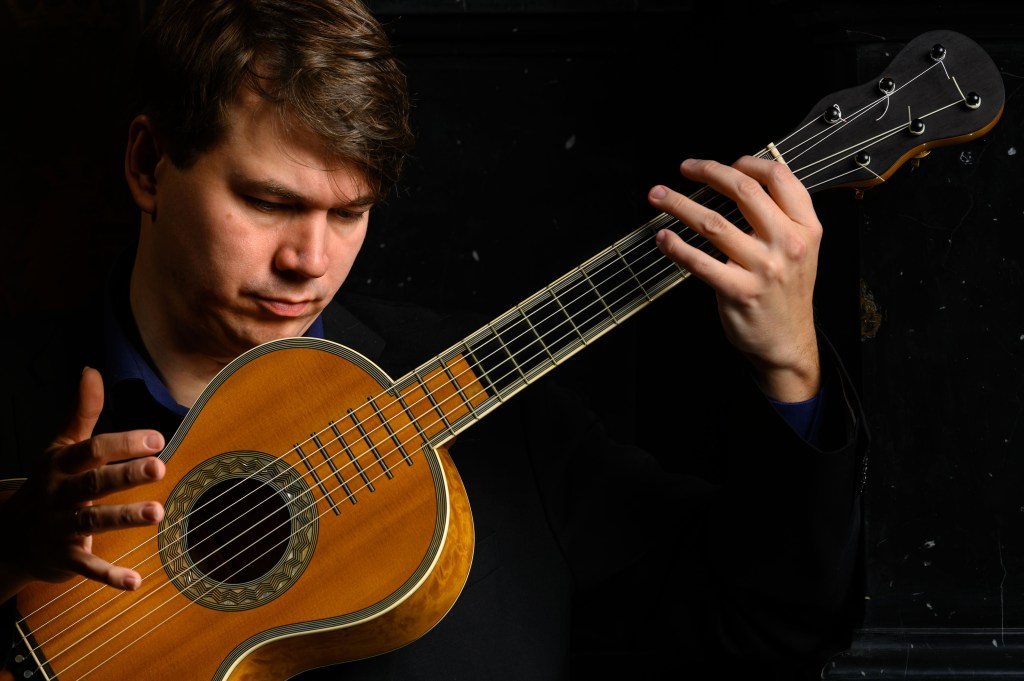
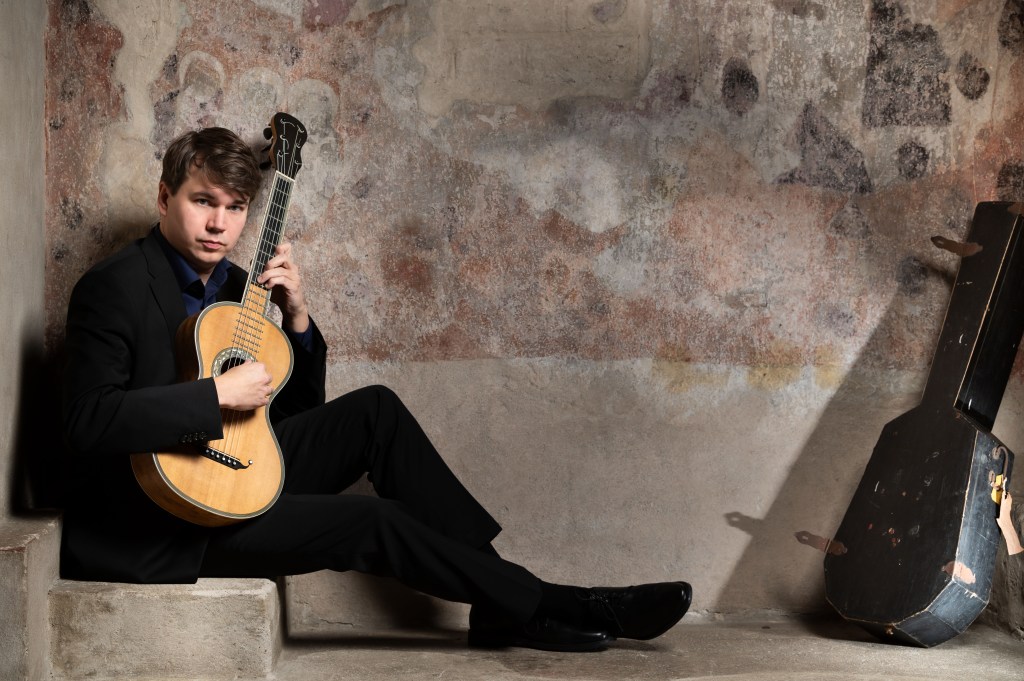
Hailing from Finland, guitarist virtuoso Patrik Kleemola recently sat down with Six String Journal to share some insight about his artistry and his journey with music. An active performer, educator, and chamber musician, Patrik is immersed in many projects, from recording whole cycles of etudes to concerts dedicated to one composer. His wonderful YouTube channel highlights his affinity for 19th century music; all performed on exquisite period instruments. His recordings of guitar repertoire across the centuries are wide-ranging though and are just as magically musical and engaging. Hope you enjoy this interview as much as I did.
PERSONAL When did you start playing and why? Or, what drew you to the guitar initially? There was my father’s semi-acoustic guitar in our house while I was growing up and before I entered for the guitar lessons in the city of Valkeakoski’s Music institute I knew some basic chords and how to play the main riff of Roy Orbison’s Pretty Woman. My grandfather from my mother’s side was in his youth an accordion player playing gigs professionally around the time of the 2nd World War and the war between Finland and Russia. Otherwise I’m the first professional musician in the family.
What repertoire do you enjoy playing the most? To me probably the best thing in being “a classical musician” is the great variety of styles throughout the centuries and having a chance to dig in deep to the different styles, musical langueages and the culture. Whether it’s the French baroque style of Lully and De Visée, playing early romantic guitar repertoire by Sor and his contemporaries with an original Lacote guitar, playing Tárrega transcriptions of the great romantic piano literature or commissioning myself new pieces from contemporary composers, the great variety is the most rewarding thing.
What guitar or guitars do you perform on? Strings? This past summer was a special one as I performed many concerts on an original René Lacote (1839) and Jose Luis Romanillos (1979). With Lacote I have done already some video recordings on my YouTube channel (more coming soon!) and I’m looking forward to do new recordings with Romanillos in 2025 and share those with followers of my channel. I also have played for ten years with a Rinaldo Vacca guitar made for me in 2014 and with this I have done many recordings and concerts. I have played a long time with Savarez strings and also have had a good experiences with Thomastik trebles which I use regularly. When playing with Lacote one has to be well aware of the maximum tensions of different strings in order to use them safely on the guitar. I usually use Ambra 800 by Aquila strings on my Lacote. I also try to experiment with gut strings but it’s challenging when playing with nails. However in the early 19th century many played with nails including Aguado, so it should be possible so I keep searching for the best gut strings that work with nail-playing.
Which guitarists/musicians have had the most influence on you? In my early teens the Julian Bream’s Guitarra video series was a fascinating documentary on the history of the Spanish guitar with passionate and colourful performances by Bream through-out the series. Later on the many great pianists such as Arrau, Cherkassky and Lupu interpretating the incredible repertoire written for piano have been an inspiration. Although now as I have been more involved in the research of the early 19th century guitar repertoire, its technique and general approach, I have realized that the improvisational approach and ornamenting the repeats, for example, have been a vital part of the performance practice of the musicians at the time. In general these great pianists, as prime examples of the great musicians of the last century, didn’t dare to touch the “sacred texts” of the great composers. However this wasn’t the way Liszt, Hummel or Sor approached their performances in the early 19th century. I try get closer to this early 19th century tradition although I feel I’m still in the beginning of the journey.
What recording(s) are you most proud of? There are two CD solo recital recordings that I did on the works that I commissioned from the Finnish and Italian composers Perchitarrasola (2012) and Through Green Glass (2015) by Pilfink Records and I’ve also been on other commercial recordings as well. The change in record business industry during the last decade have made me, and many other musicians, to think the reason to put out new commercial recordings. In the meanwhile I’ve released many video recordings on my
YouTube channel including series of pedagogic guitar literature including the complete set of Estudios sencillos by Leo Brouwer, 25 Studies by Carcassi, Sor studies op. 6 and op.35 and selection of 12 Studies by Aguado. During the COVID-19 period I did 18 works by Tárrega, a Baroque selection and rarely performed Sor masterpieces played on Louis Panormo (1838) guitar. I’ve done recordings of Sor duos with my former teacher Timo Korhonen. As an artist I think it’s important to document one’s activity (commercially or not) and the YouTube channel has now over 7000 subscribers so it has gained some following.
What are some up-and-coming projects (recordings, concerts) you are excited about? I’m going to do more Sor recordings on my René Lacote (1839) and later on I will include also other composers from the period. Looking forward to record some of the great 20th century repertoire on the Romanillos in 2025. All these I will be released on the YouTube channel, free for everyone.
The past Autumn has been very hectic with concerts of different programs including solo recitals, chamber music with strings, Concerto by the great Finnish composer Mikko Heiniö for guitar and choir and premieres of contemporary music. Besides playing a lot in Finland I’ll be playing in Italy in December and returning there in March to play in Rome which follows concerts in Germany and Japan. There will be other concerts abroad as well to be confirmed so 2025 will be internationally quite active year for me.
I’m also going to start performing “Soirée Sor” concerts with my Lacote in 2025. Focusing a whole concert to just one composer will be an interesting challenge for me. I’ll be playing works by Fernando Sor from the early Spanish period to the last ones written in Paris. I’ll also talk about the incredible life of this fascinating composer which indeed had it’s dramatic turns, more than once.
TECHNIQUE AND PERFORMANCE How much do you practice? And do you structure your practice in any particular way? Some hours everyday, more or less. At the moment I’ve one year scholarship from the Finnish State so I have one year off from the Turku Conservatory where I work as a lecturer. This means I don’t have to teach so much, so I’ve even more time to expand my repertoire, be active on chamber music and playing concerts. I also try to give some time in my practice sessions to focus on refining the technique. There’s almost always some work I’ve commissioned from a composer so I’m active working with them which is very inspiring, trying to find out technical and musical solutions to textures that are not written by a guitarist.
Photo credit:Tuomas Kourula
Do you deliberately memorize music or have a technique that helps assimilate music into memory? I still strive to play pieces by heart when playing solo recitals although expecially with contemporary works the score is sometimes needed. I don’t trust just to the muscle memory when memorizings works. If I can play the whole piece in my head without the instrument (concentrating mostly to the left hand movements), I’m confident playing the work in public.
Have you published any editions or do you plan to publish your own editions in the future? I’ve been very involved in the prepration of the published works that I’ve commissioned from the composers from the pedagogic literature to solo works, chamber music and concertos. If it’s pedagogic literature (like Etudes by Markku Klami, see the YouTube playlist) then it’s good to have more fingerings in the score. If it’s very demanding contemporary work, then it’s probably approached only by professionals and these cases the less is more when it comes to fingerings.
I have done arrangements of works by Tsaikovski, Sibelius, Satie, Bach and others. I’m thinking to publish these, hopefully soon, with video performances on my YouTube channel.
Do you have a favorite drill or set of exercises you use to warm up? I have certain patterns for both hands taking from here and there that I do if I have just 20 minutes for warming up. If I have more time I might take some of the many technique books I have and do something from there just for the fun of it.
Do you have any pre-concert rituals? The rest is very important so I try have good amount of sleep the night before. I like to have a proper warm-up session on the concert day. I might go through the program during the day, but very lightly and not necessarely all of it. Usually I try to work quite hard the day(s) before and then just let it happen on the concert day.
ADVICE TO YOUNGER PLAYERS What single most important piece of advice about practicing would you offer to younger aspiring players? Playing guitar is work of a long-distance runner. The talent is not enough and it’s also a talent to be able to work consistently and regularly.
What repertoire do you consider essential for young/conservatory students to assimilate? I think in the early 19th century repertoire there are the main technical things that one needs in playing the guitar. However from my experience as a teacher it’s not always the most inspiring material for the young students. Also reading music on the guitar is not the easiest task for young students and often this is also slowing things down. So good mixture of interesting repertoire from the classical tradition and new pedagogic literature that perhaps reflects more closely the music kids hear in their everyday life.
Are you accessible as a teacher? I teach as a lecturer in the Turku Conservatory and I’m available also for lessons online, although the latter I have to do according to my schedules which varies quite a bit.
Photo credit:Tuomas Kourula
TANGENT What is the last book that you read? Favorite author/s? I just ended Madame Bovary by Gustave Flaubert. As I’ve been recently doing a research on Sor and the early 19th century guitar, it has inspired me to read a few books by the early 19th century French authors such as Balzac and Flaubert. Often music that I’m working open doors to choose the literature. Finnish composer Harri Suilamo wrote for me recently two guitar works inspired by the Austrian author Thomas Bernhard and I ended up reading a few books of this fascinating contemporary author.
What is your favorite way to spend time when not practicing? Spending time with my family including our six-year-old son who is such an light of the day.
I’m in the process of creating a new series of guided warm-ups for my students. Here is Part 2 for Six String Journal readers. In these guided warm-ups, I’ll go through some of the most important drills to help you establish a good routine for warming up before practicing your repertoire.
So go grab your guitar and get comfortable. In this second video, I’ve set the metronome for quarter = 60. We’ll go through the first part of my go-to slur routine. For the right hand, I simply use p for strings 6, 5, and 4, and then use i, m, and a for strings 3, 2, and 1. Follow along, stay aware of good form, stay relaxed, and stick with it until you can start to increase tempo with a good foundation.
If you’re a beginner, take it slowly and don’t wear your hand out. Pause occasionally for rest and let your hand catch up. It might help to just watch the first few minutes to get a sense of how it unfolds for the fingers.
It is always wonderful to stumble upon a great young artist who seems to be doing everything right. An Tran has been praised for his incredible technique and magical playing enough to have won prizes in many international guitar and music competitions throughout the world. An has recently given recitals for the Bangkok Guitar Society, Austin Classical Guitar, Toronto International Guitar Series. This season 2019-20 will include An’s solo concert at the prestigious Segovia Classical Guitar Series in Chicago, USA in May 2020.
An is also a champion of Vietnamese music and has performed pieces written for him by Vietnamese composers on the international stage. He recently premiered the work, Ru Con (Lullaby), written for An by composer/guitarist Nguyễn Thế An in Toronto in March 2019. And his debut CD of an all-Vietnamese repertoire is to be released in early 2020. Stay tuned!
Meanwhile, An took some time from his busy schedule to share some of his experience and journey with Six String Journal. Enjoy!
Personal
SSJ: When did you start playing and why? Or, what drew you to the guitar initially?
AT: I was really lucky to have my parents that helped me find my passion. When I was a kid, I was not good at school…so I think my parents saw that and let me try a lot of different things (from drawing to piano to playing tennis!). Our house was always filled with music, breakfast, lunch and dinner. I went to sleep listening to music. Until one day, my cousin started to play the guitar. I thought to myself, at 8 years old, “I need to try that out!”. It was one of the greatest decisions in my life.
What repertoire do you enjoy playing the most?
It’s hard to say because I enjoy playing all kinds of music, but I definitely love to play Vietnamese music. The more I grow as an artist, the more I feel the connection to my home country, Vietnam. Now I always include Vietnamese music in my concert program. They can be either arrangements of Vietnamese traditional folk songs, or original compositions from Vietnamese composers. I get to share a little bit of who I am with the audience, everywhere I go.
What guitar or guitars do you perform on? Strings?
I perform on Stephen Connor guitars. I currently have 2 of his guitars and they are extremely amazing instruments. Steve made my guitars with so much care and love that it is a joy to play every single time. His uplifting spirit is also contagious and inspiring as well.
For strings, I use D’Addario Carbon, Normal Tension. They sound beautiful on my Connors, and they hold intonation really well. Since I tour with only one guitar most of the time, due to my program with Vietnamese music, I have to change to alternate tuning between pieces. They have never failed.
Which guitarists/musicians have had the most influence on you?
I would say all of my teachers made a huge impact on me as a musician and as a human being. I have too many teachers to list them, but if they are reading this, they know who they are 🙂 I can also say that I learned so much from my guitarist friends as well. When I did a few competitions, I learned so much just by listening to my fellow competitors.
My classical guitar heroes are John Williams and David Russell. When I was a kid, I listened to their recordings on repeat almost every day. I also love Nguyen Le, a Vietnamese/French jazz guitarist. He has an amazing ability of blending traditional Vietnamese music with contemporary Jazz. I highly recommend checking him out, if you haven’t heard him yet.
What recording/s are you most proud of?
I’m very proud of my upcoming album “Stay, My Beloved”, which features all Vietnamese guitar music. This recording is like my life journey. Some pieces I learned when I was a kid, and some I learned not too long ago. It was a lot of work, but the music on this album stay very close to my heart, that’s why the whole process was so satisfying. It will be released on April 18, 2020.
What are some up and coming projects (recordings, concerts) you are excited about?
I’m excited about the upcoming concerts in the US as well as my European tour in August. This will be my first time playing in Europe, so I am very excited. On top of that, I will premiere 2 works that were dedicated to me by Spanish composer Juan Erena in Cádiz, Spain. I’m also working with a few Vietnamese composers to write more works for the ever-evolving guitar repertoire. Even though my debut album is not even out yet, I’m already thinking about recording the next Vietnamese guitar album.
Technique and Performance
How much do you practice? And, do you structure your practice in any particular way?
I always aim to practice for about 4 to 6 hours a day. For me, it is important to practice every day well. I normally divide my practice to 2-3 different shorter sessions. I always try to prioritize practicing first, before doing anything else during the day.
Also, there are apps that could help with your practice schedule. I use this app called “ATracker” on my iPhone. I use its timer to keep track of every piece that I’m working on. This way, I can make sure that I don’t spend too much (or too little) time on 1 piece. By the end of the week, it would give me a graph of how much I practiced each piece. That gives me an idea of what to work on for the following week. I also normally take 1 day off of guitar. I find it helpful to get back to my practice freshly the day after.
Are there aspects of guitar that you struggle with or that you find you are still working on?
I’m constantly working to improve my listening and musicality skills. For me, playing something musically well is very important and I try to improve on that. I also don’t have the perfect technique, so I do struggle with really hard passages sometimes. However, it is easier to improve on the technical side nowadays because there are so many good resources online and good teachers out there. For me, the metronome is crucial for learning new music and master the hard passages. I also use Tonebase, an online resource for guitarists, whenever I find myself struggling with something (either musically or technically). Nothing will replace a good teacher, but there’s always some good info online to support what you’re learning.
By the way, I am NOT “sponsored” by any apps/websites mentioned above, those are just apps that I personally use.
Do you have a favorite drill you use to warm up?
Yes! Villa-Lobos’ Etude No. 1 is always a go-to for me as a warmup before a concert. I also use some of Scott Tennant’s exercises from his Pumping Nylon book. So helpful!
Do you have any pre-concert rituals?
I eat a banana before I play. I find it helpful to get some energy before a concert. I also do some meditation and make sure that I feel grateful for every single opportunity. For people to take their time out of their schedules to come see me perform, that is absolutely incredible! Definitely something to be grateful for!!
Advice to Younger Players
What single most important piece of advice about practicing would you offer to younger players?
One of the most important skills that I learned (and still trying to do) is to keep my focus at 100% while practicing. When I was younger, I practiced like a machine. Mindlessly ran my pieces as many times as possible. All I’m doing now is trying to fix all the problems that came from that!! It can create huge problems and bad habits to fix later. Thankfully, I’ve had amazing teachers who patiently sat with me to tell me what I’ve been doing wrong.
What repertoire do you consider essential for young/conservatory students to assimilate? Why?
I think the most essential skill for a young musician is to cover all periods of classical music. To be able to teach and find your own “voice” in your playing, it’s important to go through all the essential “classical” guitar repertoire. I also think etudes are super important as well. For me, personally, I loved (and still play) the Giuliani, Villa-Lobos and Brouwer Etudes.
Tangent
What is the last movie that you watched?
Parasite, that was crazy!
Do you try to stay healthy? Exercise? Follow a particular diet? Have a favorite pre-concert food?
Yes absolutely. I’ve been doing yoga lately and it really helps. I’ve had lower back pain in the past, so now I try to do yoga more regularly. Nothing fancy, just iPhone apps and Youtube videos. Also, my chiropractor told me that it is important to get up more often to stretch, and to not sit and practice for hours straight (which was my bad habit). I might have to give him commission for this piece of advice!!!
What is your favorite way to spend time when not practicing?
I love to cook. I think cooking is so similar to playing music. Other hobbies are watching movies with my wife, playing FIFA or board games with my family and friends, playing with my puppy Luna. My dad is a former photojournalist, so he taught me a lot about photography. I am now addicted to photography and I enjoy taking pictures of my travels.

 Six String Journal