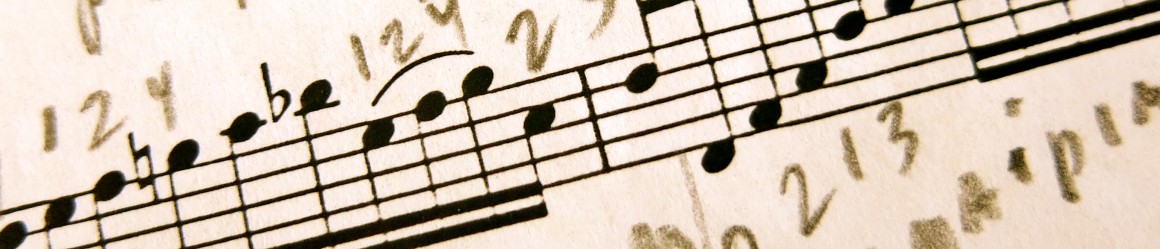
Five Reasons Why Sor Studies are Awesome.

My goal this morning was to warm up on a particular Fernando Sor study that I love before proceeding to the Gran Solo, then play through some Bach that I’m working on very slowly, and then review a few other short works. Two hours later, I found that I had only been reading Sor studies and a few of his themes and variations. It was awesome. There is something so aurally purifying about only playing Sor for an extended time. Maybe pianists feel the same way about Mozart. Afterwards, Barrios sounds so rich; Bach sounds like a new language; de Falla is extravagant. Ears always open up in unusual ways.

I thought about this while I took a tea break and thought it was worth writing a bit about. Here are some reasons why Sor is so awesome.

  1. Whether you are a beginner, at the intermediate stage, advanced, or even professional, Sor studies are a great way to build reading and interpretive skills while enjoying finely crafted music for the classical guitar. Once your skills are to the point where you can almost play through any Sor study really well the first time, you notice how they are perfect for what they are.
  2. Sor studies shine in their harmonic and structural simplicity. This is a strength (and just how it was in the classical period). Because of this, it allows students to focus on the technique without too much happening UNTIL Sor provides a special musical moment that is hard to not notice. This focuses the student on doing something beautiful and musical while approaching and departing from the special moment. I often think Sor studies are a bit like wandering on a pretty forest path where you are aware that there may be something special up ahead, and if you’re fortunate, you will spot a beautiful flower, see an owl, or find a huckleberry shrub. Those are the moments to enjoy!
  3. Because there are few unnatural hand positions in his studies, when there are, a student is confronted with one problem to overcome and solve. Once this is done, it carries over for many other musical situations in other studies and pieces. It is very clear progress.
  4. Sor studies pretty much cover all the practical technique requirements to push you into intermediate territory as a student. Voice balancing, shifting, thirds, sixths, scales, Alberti bass, arpeggios, slurs, ornaments, tension, and harmonic resolution, all in the context of a musical situation.
  5. Sor studies force you to work on your sound. If you have a poor tone, your Sor will sound horrible. Cultivating a rich, clear, and sparkly tone will make Sor sound profoundly beautiful.

Here is a link to Mel Bay’s Complete Sor Studies (Ed. Grimes). It’s a nice edition, but I wish it were spiral bound. Here is a link to an edition that I did of a few favorites.

Do you have favorite Sor Etudes? I’ll try and post a few that I really like soon. Stay tuned (ha, ha!).

Featured Artist and Interview with Thomas Athanaselos

Hailing from Greece,  guitar virtuoso Thomas Athanaselos recently took some time to share his thoughts about his journey with guitar. Equally comfortable playing jazz arrangements, his own evocative compositions, and classical repertoire, Thomas’ playing is musical, fluid, and direct. I hope you enjoy learning a bit more about him here.

2.jpg

When did you start playing and why? Or, what drew you to the guitar initially?
I started playing the guitar at the age of 11. My influence was a teacher in primary school who always accompanied the school choir with his guitar and he really seemed to enjoy it. Next year my parents just signed me up for a Music School. As time went by I realized my passion for the guitar and music generally.

What repertoire do you enjoy playing the most?
I have always loved playing various music styles from different music periods. The last years my repertoire includes music from the 18th-19th Century but also contemporary compositions of mine and other composers.

What guitar or guitars do you perform on? Strings?
Over the last years I’ve performed on a guitar built by Vassilis Sigletos (GR) and I use Knobloch Actives (Carbon) high tension strings.

Which guitarists/musicians have had the most influence on you?
Throughout the years I have also played the electric and acoustic guitar, so my first influences were guitarists like Steve Vai, George Benson, Robben Ford and Al Di Meola. At the age of 16 when I focused on the classical guitar, guitarists and musicians from 18th to 21th century like J. S. Bach, Augustin Barrios Mangore, Fernardo Sor, Isaac Albeniz, Joaquin Rodrigo and the great Paco de Lucia had a big impact on me. Of course, I can’t dismiss Astor Piazzolla’s music.

If you have recordings, which recording/s are you most proud of?
I recorded my first album ‘In Memoriam’ in 2018, which received very good reviews so I could say for sure that this is the recording I am proud of. Recordings are always hard to satisfy you 100% so I hope the next one will be even better.

What are some up and coming projects (recordings, concerts) you are excited about?
Right now due to the situation Covid-19 caused, we are facing a different routine and lifestyle which is something new for everyone. That makes it difficult to arrange concerts so I am focusing on composing and studying new repertoire.

How much do you practice? And, do you structure your practice in any particular way?
I am always careful to keep my mind and my fingers in a good condition. When I have arranged concerts I practice every day 2-3 hours.

Do you deliberately memorize music or have a technique that helps assimilate music into memory?
I don’t have any specific way to memorize music. Sometimes the harmony and the melodic line of the piece makes it easier to memorize it. In any case I try to be careful and concentrated when I first study a piece. Many repeats and slow playing also helps me to find the details and deeply understand the score.

Have you published any editions or do you plan to publish your own editions in the future?
Yes, I have published four compositions of mine through Bergmann Editions.
You can find the scores here: Bergmann Editions.publications.jpg

Do you have any pre-concert rituals?
For sure, I always try to take some time to relax on my own and not to get in touch with many people. This helps me to stay calm and concentrated on my program. I like to play some scale exercises or some slow tempo parts of the pieces. To me  these are the essentials. The ideal preparing for me is maximum 45 minutes before the concert.

What single most important piece of advice about practicing would you offer to younger players?
I think young players should first start training their brains. They should try to create their own personality in music generally and this will lead them to new paths of playing.

Do you try to stay healthy? Exercise? Follow a particular diet? Have a favorite pre-concert food?
As our ancestors used to say ‘a healthy mind in a healthy body’. So I always try to exercise because it also affects positively my mood and my playing and I have healthy lifestyle in general. I don’t have a specific pre-concert food. A good meal for sure and maybe a bar of chocolate just before the concert!

What is your favorite way to spend time when not practicing?
Running, cycling, watching movies, listening to music, and spending some time walking around with my dog!!

3.jpg