Domenico Scarlatti (1685-1757) wrote over 500 sonatas for harpsichord. Fortunately, many have been arranged and transcribed for guitar and many await transcription. During 2020 and 2021 I found myself in the Scarlatti rabbit hole. I listened to hundreds of them, read through ones that I thought might work that to my knowledge had not been transcribed, transcribed many for solo and duo guitar, learned too many to keep track of, and am still learning. They captivate my imagination and they teach me a lot about myself and my playing.
Sonata in E Major, K.380 is, perhaps, one of Scarlatti’s most famous sonatas. With its march-like rhythm to the emerging beautiful lyrical lines, Scarlatti’s boundless imagination sparkles. I used a combination of editions (but primarily Manuel Barrueco’s) and the original score to find a version that works for my hands. Hope you enjoy it.
And as a bonus, while researching some of the sonatas, I came across this hilarious article ranking the Sonatas. : )
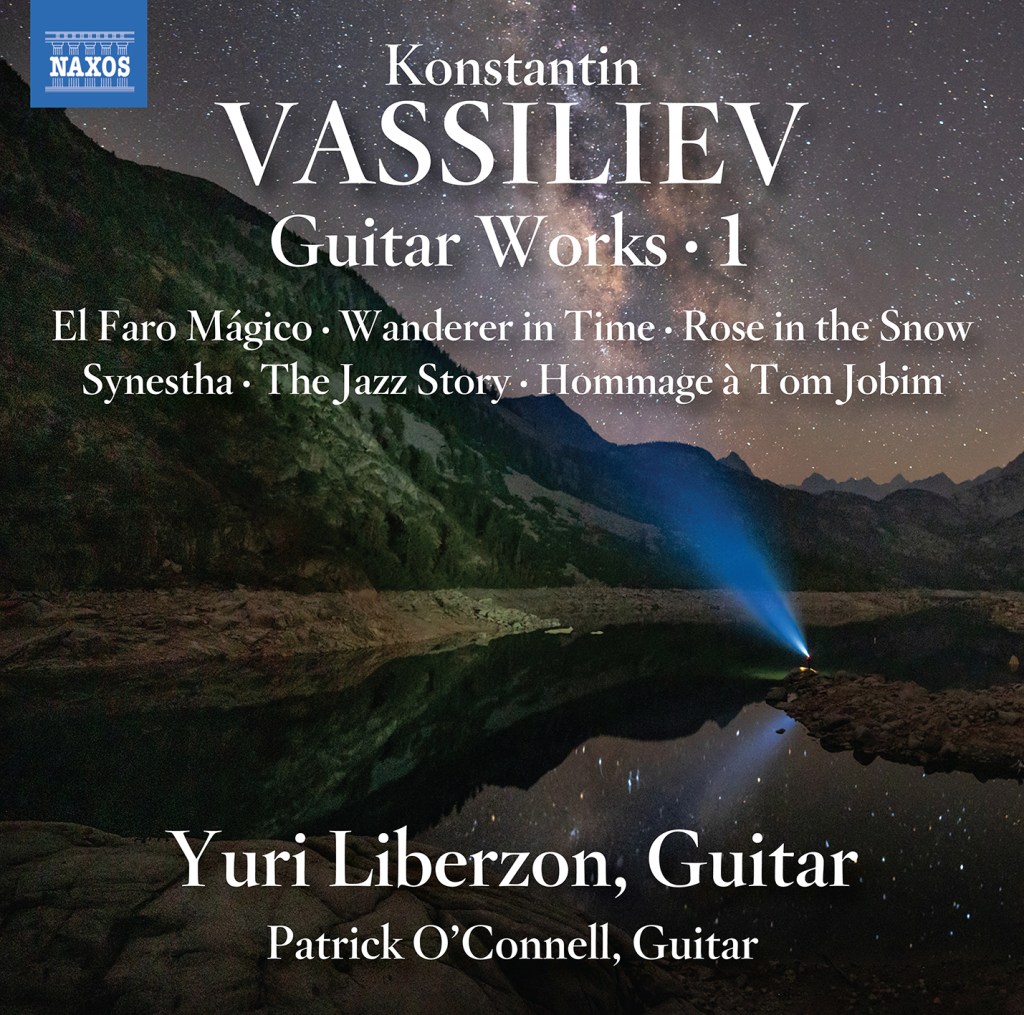
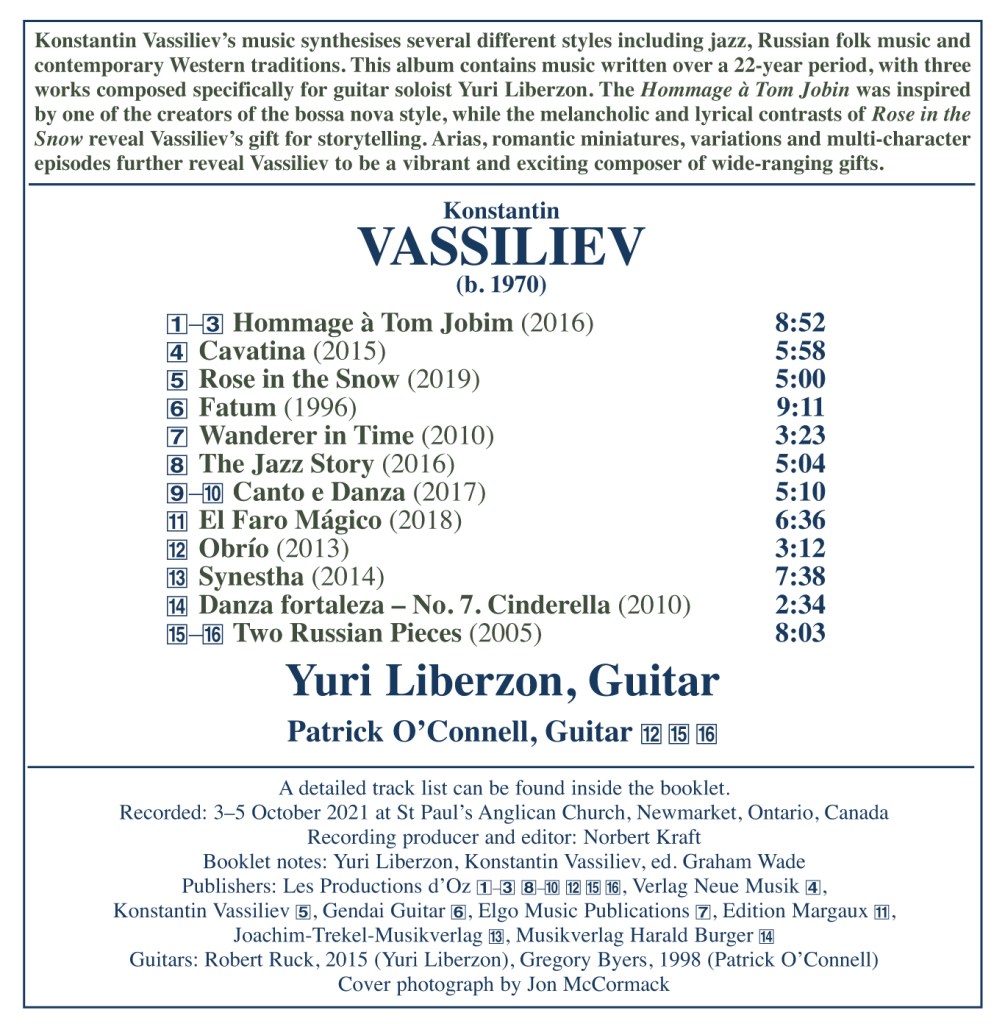
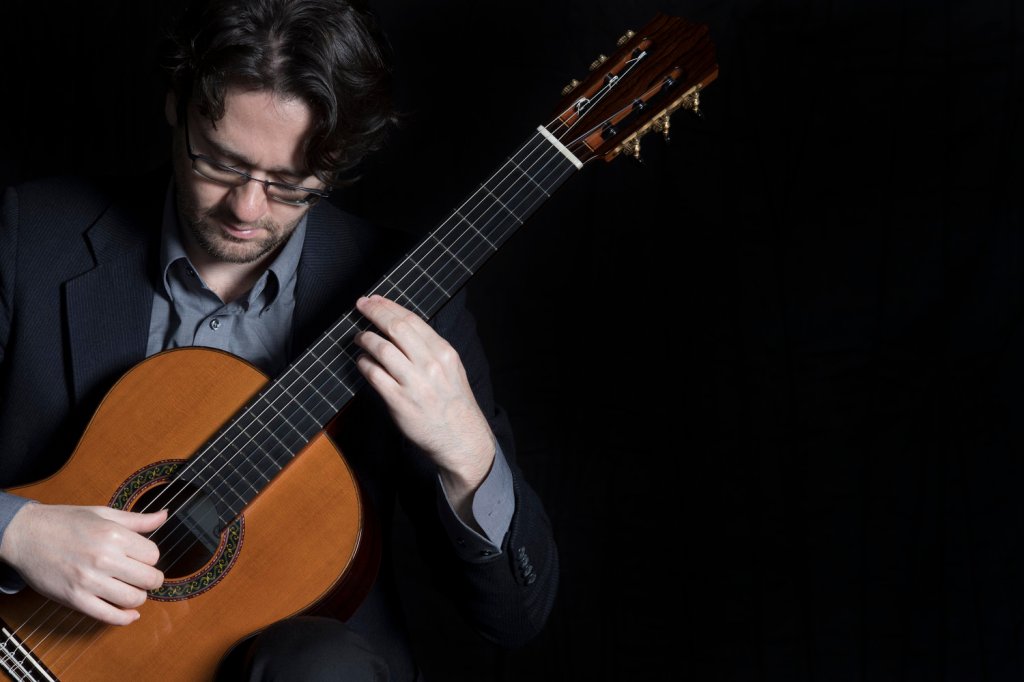
Virtuoso guitarist, Yuri Liberzon, has just released a wonderful recording dedicated to the works of Russian composer Konstantin Vassiliev. On first listen, it is evident that there is a current of very high quality running through this recording – the music is played with the usual high musical standard I have come to expect from Yuri (and on a few tracks by his Duo Equilibrium partner, Patrick O’Connell) and recorded masterfully by Norbert Kraft on the NAXOS label. If you are not familiar with Vassiliev’s compositions for guitar, the selected pieces from the project span over 20 years of stylistically-diverse musical output and states a strong case for including Konstantin Vassiliev compositions in the modern guitar compositional canon.
The CD opens with Vassiliev’s Hommage a Tom Jobim. A great opener, the three movement piece evokes the spirit of Jobim’s music with Brazilian grooviness, rich harmonies, and an ample assortment of percussive effects. Yuri’s flexible technique makes all of it sound so natural that it is easy to forget you are listening to just one guitar. The middle movement Contemplación, with it’s meditative melodic quality allows Yuri’s expressivity to shine through.
photo credit: Jon McCormack
In both Cavatina and A Rose in the Snow (written for Yuri), Vassiliev’s use of jazz harmonies is magical and thoroughly convincing. Yuri’s crisp and clear sound portrays the soundscapes openly and without pretension. The earliest work on the CD, Fatum, was one of my favorites. Perhaps a bit more of an emotionally-laden piece, the themes woven through the piece are masterfully enveloped with rich counterpoint, canonic echos, and evocative elaborations, and clearly point to the fact that Vassiliev’s compositional talents were firmly in place decades ago. This work also highlights some of the qualities I admire most in Yuri’s playing, namely, his sense of pace and rhythm. The arc of the work is masterfully revealed only as Yuri can do.
Another wonderful composition is A Wanderer in Time. The emotions Vassiliev captures throughout the piece, from sadness to hope, is a testament to his ability to let a story unfold. Obrio and Two Russian Pieces were ear-opening and an effective way to guide the project to an end by adding another guitar. Yuri and Patrick complement each other well throughout these technically demanding pieces.
It’s been a while since I’ve listened to a recording from beginning to end of a composer’s music that I am not very familiar with and found this particular CD particularly compelling. It is no wonder why other notable players like Carlo Marchione and Roman Viazovskiy champion his music. Give this a listen, Yuri’s playing is fantastic and the music is wonderful.
Here is virtuoso guitarist Pablo Garibay’s wonderful and expressive interpretation of the famous and well-loved Prelude Nº1 by Brazilian composer Heitor Villa-Lobos. Pablo’s use of phrasing, dynamics, and colors really breathes life into Villa-Lobos’s richly textured prelude. Beautifully produced video!
One of the most played pieces on the classical guitar, the Spanish Romance, is a wonderful piece for students to work on all sorts of musical and technical challenges. In the next two videos I demonstrate several ways to practice the Spanish Romance that will make it more musical and fun to play. Hope it helps!
One-Time
Monthly
Yearly
Make a one-time donation
Make a monthly donation TO Support Six String Journal
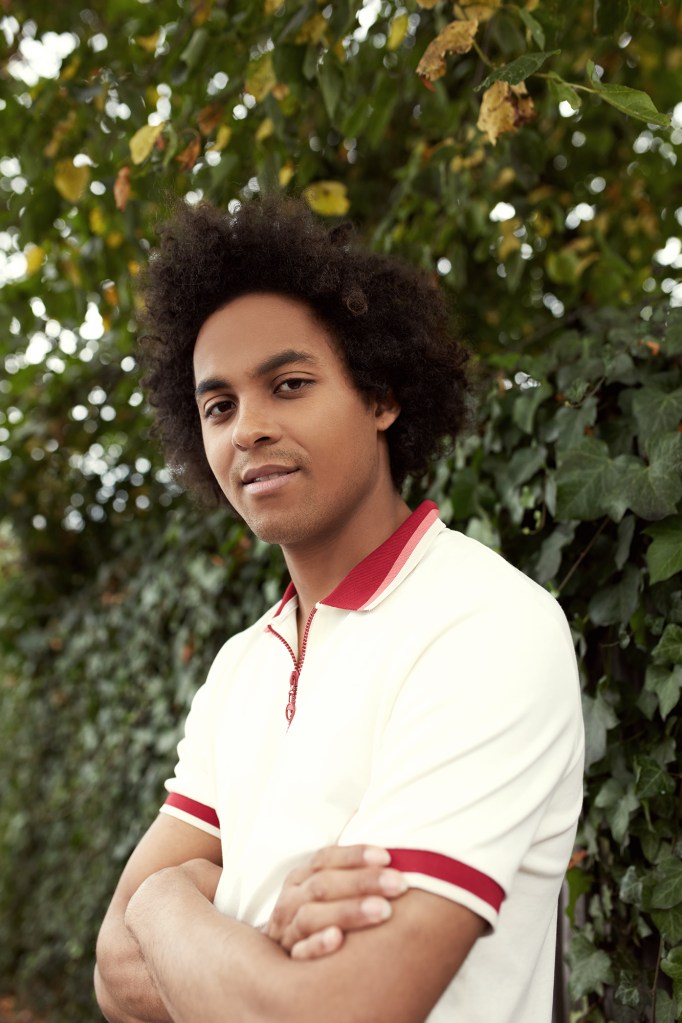
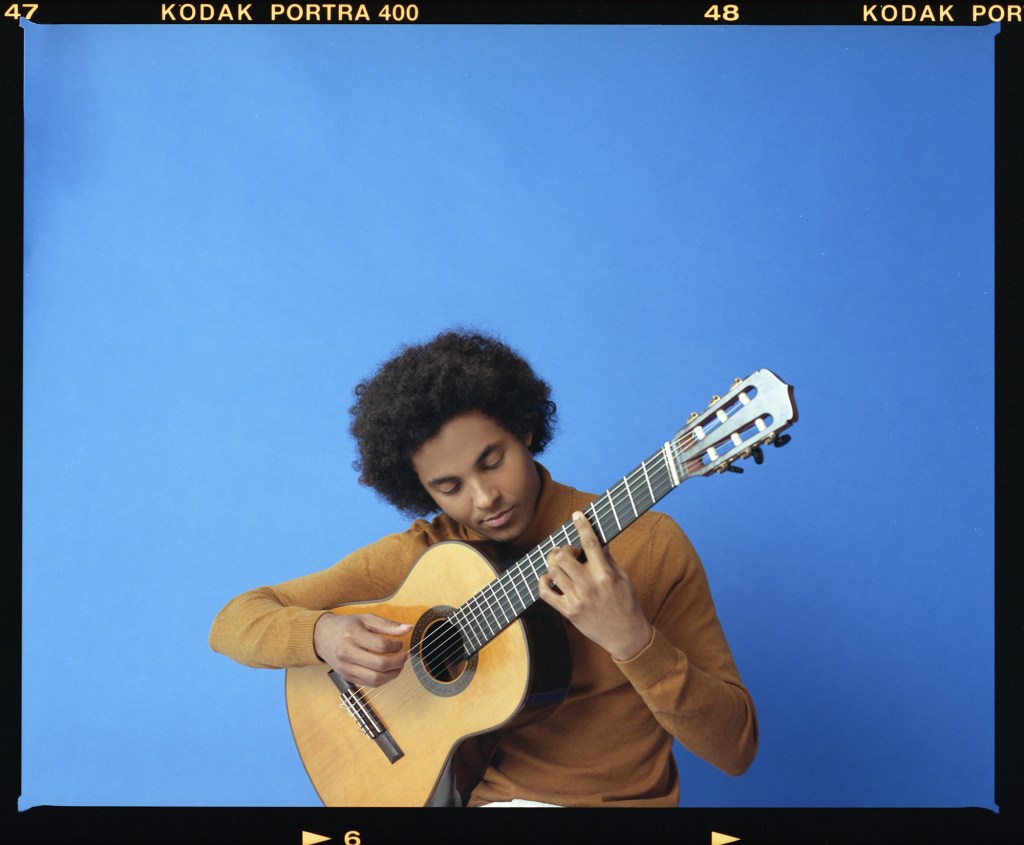
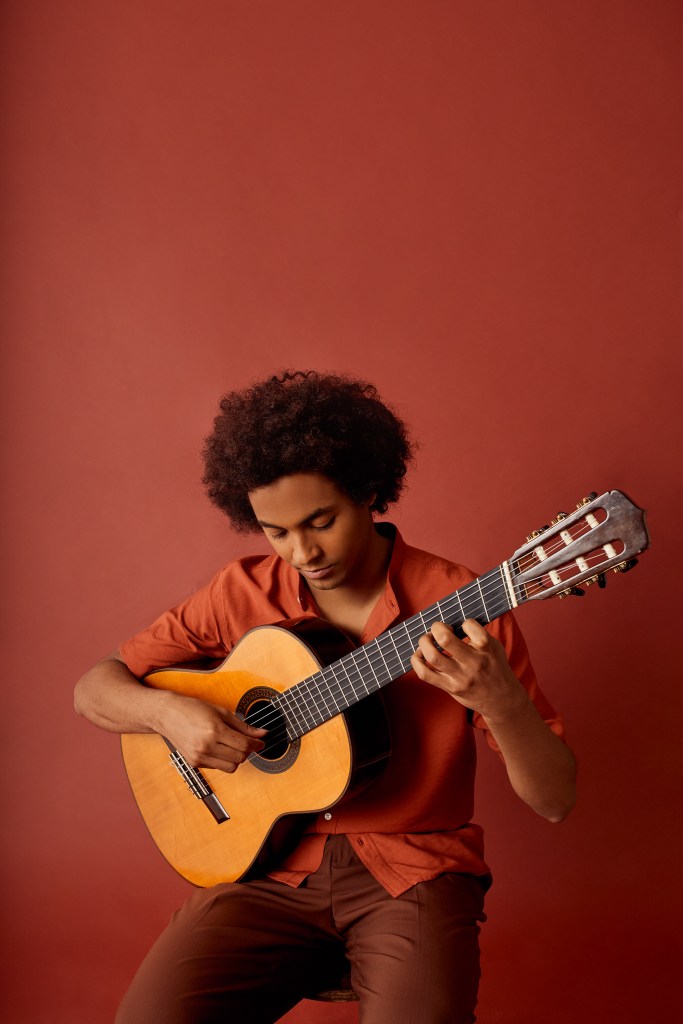
The high praise the young Brazilian virtuoso guitarist, Plinio Fernandes, has received for the release of his first recording, Saudade, on the Major label Decca Gold is well deserved. The recording highlights Plinio’s wonderful versatility as a musician. From interpreting the well-loved Heitor Villa-Lobos Preludes to magical arrangements of music by Sergio Assad to collaborations with cellist Sheku Kanneh-Mason and violinist Braimah Kanneh-Mason, Plinio navigates the rich musical landscape with ease and a completely natural and musical technique. He recently took some time to answer some questions for Six String Journal readers. Enjoy!
Personal
When did you start playing and why? Or, what drew you to the guitar initially?
My father is an amateur guitarist, so I would see the instrument around the house and watch him play, and naturally that inspired me to start.
What repertoire do you enjoy playing the most?
It varies a lot. Currently I am enjoying playing the repertoire I recorded for my album, as I am performing it a lot. It connects me deeply to my Brazilian roots, for being music I really love and that gives me a true sense of identity.
What guitar or guitars do you perform on? Strings?
I currently play a Jeffrey Elliot and my strings of choice are Augustine Regal.
Which guitarists/musicians have had the most influence on you?
Fabio Zanon, Julian Bream, David Russell, Andres Segovia, John Williams, Arthur Rubinstein, Eli’s Regina, Djavan, João Bosco, Racionais MC’s and Tupac.
What recording/s are you most proud of?
The recording of the 5 preludes by Villa-Lobos recorded on my debut album “Saudade”.
Are there any recordings that you consider have the finest recorded sound for guitar?
Yes, Julian Bream’s recording of Valses Poéticos by Granados. The range of colors in that is beyond magical.
What are some up and coming projects (recordings, concerts) you are excited about?
I really look forward to the concerts in the next feel months in the UK, Portugal, Hong Kong and Brazil. Also I look forward to start planning my second album.
credit: Rebecca Naen
Technique and Performance
How much do you practice? And, do you structure your practice in any particular way?
Around 4 hours a day. Usually, in sessions of 35 minutes, with 10 minute breaks in between.
Are there aspects of guitar technique or performance that you struggle with or that you find you are still working on?
Tremolo doesn’t naturally fit my hands, so every time I play a tremolo piece (which is rare) I have to put in the extra work.
Do you deliberately memorize music or have a technique that helps assimilate music into memory?
I feel lucky to have the ability to memorise music at a decent speed. When the time is short, deciding the most efficient fingerings straight away and listening to recordings of it repeatedly while walking, doing the dishes etc, help me massively. Having the music in your ears as well as under your fingerings is vital to learn things quickly.
Have you published any editions or do you plan to publish your own editions in the future?
I haven’t yet, but certainly plan to publish my own arrangements and transcriptions soon.
Do you have a favorite drill or set of exercises you use to warm up?
I start the practice with slow right hand exercises: usually, Villa-Lobos 1st estude, and a mix of Giuliani and Carlevaro exercises. After that, lately I have been doing a series of exercises that I learned from Marcelo Kayath in a masterclass, that helps conditioning the left hand to be in the correct position.
Do you have any pre-concert rituals?
I don’t like practicing a lot on the day of the concert. Having a nap a few hours before – if it is an evening concert – makes a huge difference and eating a banana 20 minutes before is a must for me!
credit: Rebecca Naen
Advice to Younger Players
What single most important piece of advice about practicing would you offer to younger aspiring players?
My advice is for them to be curious, and try and be exposed to as many different styles of music as possible.
What repertoire do you consider essential for young/conservatory students to assimilate? Why?
Villa-Lobos solo guitar works. In my opinion he is one of the best melodists of all time, and through his guitar music, one learns how to sing with the instrument.
Recordings that every young guitarist should be familiar with and why?
The output of Bream and Segovia.
credit: Rebecca Naen
Tangent
What is the last book that you read? Favorite author/s?
The Torrents of Spring, by Hemingway , who happens to be my favorite writer at the moment.
Do you try to stay healthy? Exercise? Have a favorite pre-concert food?
I grew up by the sea, and have been always very physically active, therefore exercising regularly is really vital to my general health and mood. I try to play football once a week and do some Pilates/yoga about twice a week.
Do you meditate in any way?
Yes, at least 5 minutes everyday. Usually in the middle of the day, or just before going to bed, to clear up the mind and recharge my energy.
What is your favorite way to spend time when not practicing?
Reading, exercising, following the news (mostly about football and politics) and most importantly being around dear people, to compensate the lonely moments of practicing and traveling.
In this video I talk about using guide fingers to help choreograph the left hand. Guide fingers really make everything flow in the left hand by keeping it in contact with the strings. They also prevent the necessity to lift and place which can cause stress and tension in the left hand. Don’t forget to like, share, subscribe, and leave a comment if you have questions.
In this video I talk about practicing the six basic four string arpeggios with four right hand fingers and the importance of planting for beginners. Planting will stabilize the right hand and will help deepen your hand’s relationship to the span of the strings.
Don’t forget to subscribe to the youtube channel. I’m putting more stuff that is not linked right away to Six String Journal. Leave a comment if you have questions!
I have news for Six String Journal subscribers. I just uploaded the first of many tutorials on my YouTube channel! Check it out. If you have topics you’d like discussed or covered, post a comment and I’ll consider it.
I wrote this for the Tonebase blog a while ago and thought I’d share it here. Hope it helps!
A crucial aspect of right-hand technique is the ability to control the stroke of each finger when it interacts with the string. During this interaction, the energy of the stroke determines the volume of the note and, if well done, does not displace the other right-hand fingers in the process. This requires right-hand finger independence. To this end, I like to walk students through a series of activities utilizing a fixed right-hand finger with the focus of keeping the hand and inactive finger calm.
During the sequence and patterns, watch the right hand as carefully as possible for any extraneous or micro movements. Ask yourself whether it is possible to pare these movements down to stillness. Does the thumb stroke overwhelm the hand? Are there any fingers or combinations that are more uncomfortable or weak? Is the stroke efficient?
To start, place all right-hand fingers (p, i, m ,a) on the 4th, 3rd, 2nd, and 1st strings respectively. I recommend using a metronome (quarter note = 60).
Step 1
While keeping the inactive finger on its respective string, starting softly, play the following patterns. Go slowly and spend enough time on each pattern (a minute or two) before moving to the next one. Focus on keeping the same volume in both the thumb and the fingers that are alternating or working together. Note:a should remain fixed on string 1
Repeat Step 1 but impose the metrical accent. Think: 1 and 2 and 1 and 2 and, etc. Weak beats (the ands) should be slightly softer. For fun, drop the strong beats to the background and play the weaker beats with more energy. Watch your hand with curiosity to see how it behaves. Make deliberate adjustments until it feels groovy, balanced, and comfortable. Experiment with volume. Experiment with tempo.
Step 2
While keeping the inactive finger on its respective string, starting softly, play the following patterns. Take your time to feel. Focus on keeping the same volume in both the thumb and the fingers that are alternating or working together. Note:m should remain fixed on string 2
Repeat Step 2 but impose the metrical accent. Keep weak beats softer. Watch your hand with curiosity to see how it behaves. Make adjustments until it feels right. Experiment with volume and tempo.
Step 3
You know the drill. Take your time to feel. Focus on keeping the same volume in both the thumb and the fingers that are alternating or working together. Note:i should remain fixed on string 3.
Repeat Step 3 but impose the metrical accent. Keep weak beats softer. Watch your hand with curiosity to see how it behaves. Make adjustments until it feels right. Experiment with volume and tempo.
It is nice to follow these three steps with some arpeggio etudes.
For the number of times I get asked for recommendations, you would think that I would just make a page like this. Well, here it is with links and brief descriptions of what I recommend to students as they get further into their guitar ambitions.
GUITARS – Up to about $1500, your best bet is a Cordoba student guitar. They are set up extremely well, are well-balanced and well-made, and they sound great. For a factory made guitar Córdoba has really cornered the market in quality because of how consistently good the guitars are at each price point. Both my children grew up playing the Cordoba fractional guitars and they are hands down the best out there. Now they use an all solid Cordoba C10 when they have their guitars at school or for travel but they do prefer to borrow my concert guitars when they are home. Lucky kids.
Spruce or cedar? It really depends on taste but the nuances of a truly great spruce or a truly great cedar concert guitar don’t make as big a difference in student guitars so I usually recommend cedars for their response, warmth, and open sound. Spruce will sound a bit more firm and it may take some playing to get the sound to open up a bit.
The C5 is there introductory model with a solid top:
Cordoba C5
The C7 and C9 are both a big step up for not much more:
Cordoba C9Cordoba C7
GUITAR CASES
Again, Córdoba’s humicase line is a great option. Even for traveling. But if you want a sturdier case and want the ease your nerves when checking the guitar, I would recommend a TKL Crossrock, Hiscox, BAM, or Visesnut or even a Carlton or Leona if you really want overkill. But for a student guitar it might be worth more than the guitar.
Humicase Hardshell Case
Crossrock Poly Carbon Case
THINGS YOU NEED IN YOUR GUITAR CASE
STRINGS AND STRING WINDER – I’ve experimented with Savarez, Knobloch, Aquila, Galli, and a few others over the years but I seem to always come back to D’Addario. Some guitars don’t do well with higher tension strings but some sound great. Your left hand might appreciate normal tension if you practice a lot. Don’t forget the string winder. If you change strings once every week or two, you want one.
D’Addario EJ45 normal tension stringsD’Addario EJ46 hard tension stringsD’Addario String winder and clipper
NAIL FILES AND SANDPAPER – You need a rough diamond or glass file (I’ve used the same one for over a decade), this specific sandpaper, and a nail buffer to get your nails to a glass finish. I’ll cover shaping in another post but you check this post out if you want to get to the bottom of it.
CAPO – I think the Schubb classical capo is the best one. Classical guitar capos are different than steel string capos because the contour of the neck is more flat in a classical.
Schubb classical capo
TUNER – I think most electric tuners work the same way. I like the Korg tuner because the battery fits in the attached part and the tuner is super slim.
Korg Pitch Clip
THINGS YOU NEED IN YOUR PRACTICE ROOM
METRONOME – You would think that the sheer number of metronome apps available would render this metronome obsolete but I love it. The percussive click is so satisfying and if you are tired of staring at screens, this is the way to go. By the way, what do you call a dwarf who hangs out in the subways of Paris?
Seiko Quartz Tuner
FOOTSTOOL AND SUPPORTS – For the most part, I still prefer using a footstool and the one below is my favorite. It’s solid and adjustable. I’ve experimented with most of the supports out there and while they do provide some comfort because you can sit in a more centered way, the idea of suction cups possibly popping off while performing has always stopped me from fully embracing them. However, I know many performers who love them.
K&M FootstoolErgoplay
CHAIR – This is more important than you think. Face it, you are going to be sitting for many hours of your day if you practice a lot. I’ve searched and searched over the years for a chair that was comfortable, affordable, adjustable, ergonomic, practical, and passably stylish to use in a performance. So far, while it’s not perfect it’s what I’ve settled on until I find better. I love that it is adjustable and it tilts slightly forward to promote better posture.
Adjustrite Practice Chair
MUSIC STAND – There are plenty to choose from but I stay away from the wire music stands where you can’t write or balance more than a few scores on. Who needs that type of frustration? So I prefer the old school Manhasset. I have several in the house but my favorite is the lower one because it is good for performing. It does not block the performer like the higher stands and it sort of sympathetically resonates a bit if you listen.
Manhasset Music Stand
While that doesn’t quite cover all the gear, it’s a start. I’ll post another soon with fake nail, recording, and other stuff that I’ve found useful in my practice room…
Disclosure: some links earn a commission and as a KinderGuitar educator I offer Cordoba guitars to my students.







 Six String Journal