Gear Review: The Soundfile

The Nail File I Didn’t Know I Needed

by Leonardo Garcia

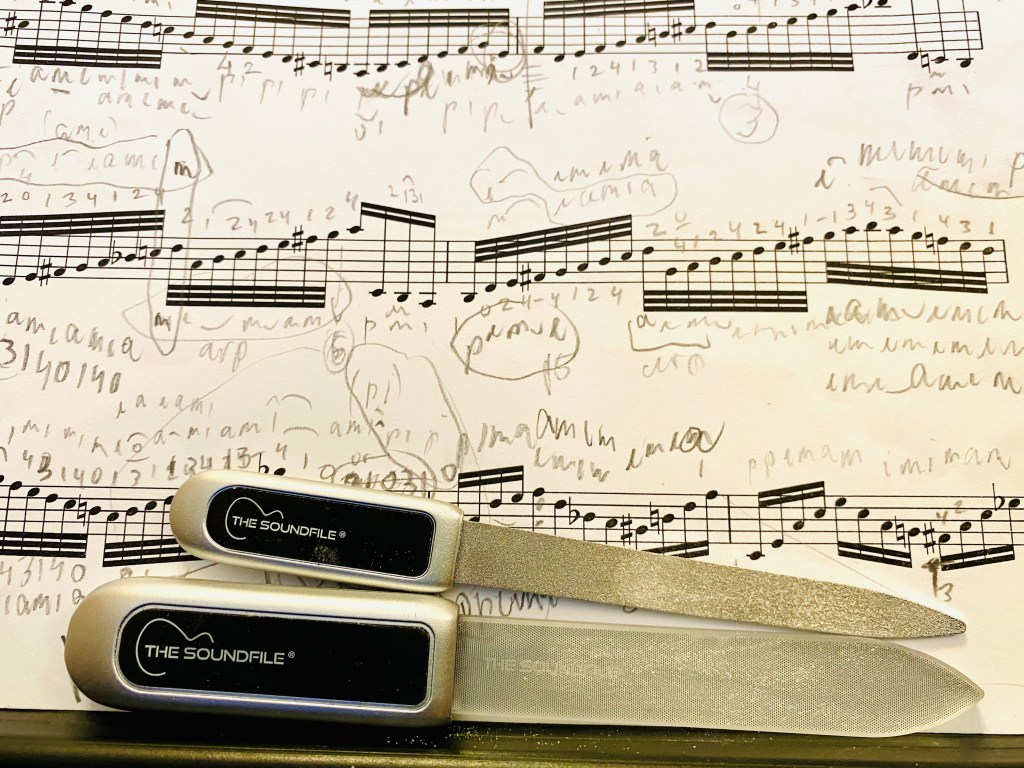
Last Christmas, while hunting for stocking stuffers for my sons, I stumbled across a website called The Soundfile. I wasn’t expecting much—after all, a nail file is about as straightforward as it gets. But The Soundfile’s Next Generation Glass Nail File is one of those small but game-changing tools that makes you wonder how you could’ve gone so long without it.

From the very first use of the Next Generation Nail File, I realized its existence wasn’t just a marginal upgrade. The file creates such a fine, polished ramp that I felt using fine sandpaper out of sheer habit afterwards was unnecessary.

What sets this file apart are two things:

  • Thickness & Rigidity: Unlike the flimsy feel of the standard sapphire file, this one is thick and completely rigid. That stability translates directly into a straighter, more controlled ramp.
  • Transparency: You can literally see through the file as you work, which provides a unique level of precision. It’s like having an X-ray view of what you’re doing.

For over 35 years, I had been using traditional sapphire nail files. They did the job, but never perfectly. The thinness and slight flexibility of sapphire files meant that achieving a truly straight, polished ramp was always a compromise. If you are wedded to the use of a sapphire metal file, The Soundfile also has a thicker sapphire file, which is a step above the usual.

It’s rare to find a tool this simple that so clearly outperforms what came before it. Sometimes the best discoveries come when you’re not expecting them. For me, the Next Generation Nail File was one of those discoveries.

Use the code SIXSTRING for a 25% discount off of The Soundfile website.
Five Reasons Why Sor Studies are Awesome.

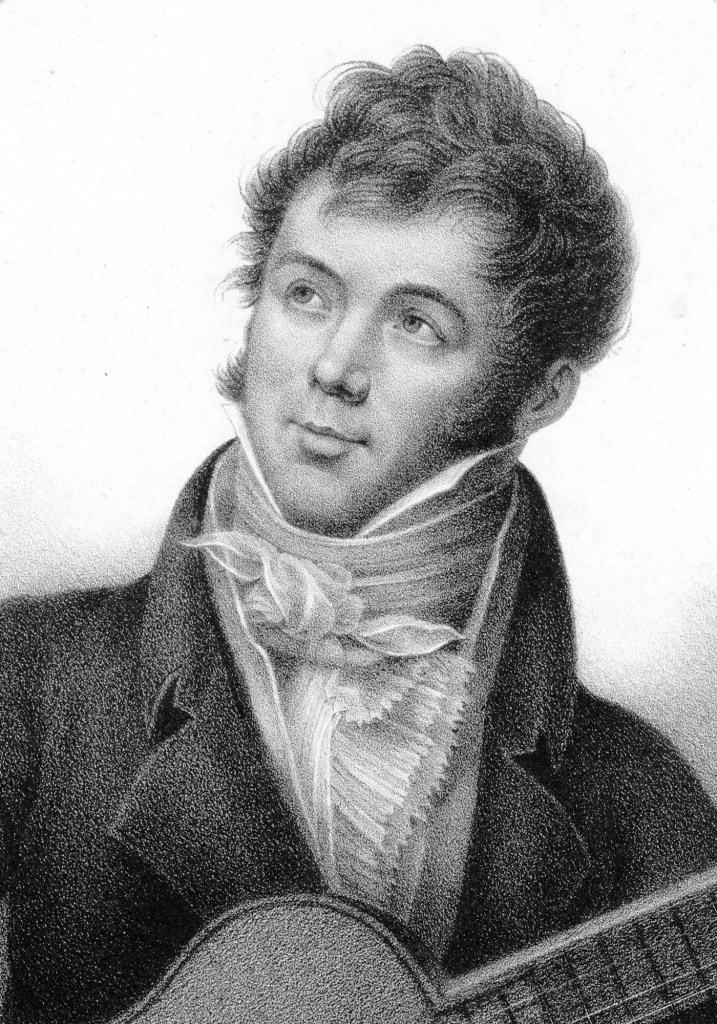
My goal this morning was to warm up on a particular Fernando Sor study that I love before proceeding to the Gran Solo, then play through some Bach that I’m working on very slowly, and then review a few other short works. Two hours later, I found that I had only been reading Sor studies and a few of his themes and variations. It was awesome. There is something so aurally purifying about only playing Sor for an extended time. Maybe pianists feel the same way about Mozart. Afterwards, Barrios sounds so rich; Bach sounds like a new language; de Falla is extravagant. Ears always open up in unusual ways.

I thought about this while I took a tea break and thought it was worth writing a bit about. Here are some reasons why Sor is so awesome.

  1. Whether you are a beginner, at the intermediate stage, advanced, or even professional, Sor studies are a great way to build reading and interpretive skills while enjoying finely crafted music for the classical guitar. Once your skills are to the point where you can almost play through any Sor study really well the first time, you notice how they are perfect for what they are.
  2. Sor studies shine in their harmonic and structural simplicity. This is a strength (and just how it was in the classical period). Because of this, it allows students to focus on the technique without too much happening UNTIL Sor provides a special musical moment that is hard to not notice. This focuses the student on doing something beautiful and musical while approaching and departing from the special moment. I often think Sor studies are a bit like wandering on a pretty forest path where you are aware that there may be something special up ahead, and if you’re fortunate, you will spot a beautiful flower, see an owl, or find a huckleberry shrub. Those are the moments to enjoy!
  3. Because there are few unnatural hand positions in his studies, when there are, a student is confronted with one problem to overcome and solve. Once this is done, it carries over for many other musical situations in other studies and pieces. It is very clear progress.
  4. Sor studies pretty much cover all the practical technique requirements to push you into intermediate territory as a student. Voice balancing, shifting, thirds, sixths, scales, Alberti bass, arpeggios, slurs, ornaments, tension, and harmonic resolution, all in the context of a musical situation.
  5. Sor studies force you to work on your sound. If you have a poor tone, your Sor will sound horrible. Cultivating a rich, clear, and sparkly tone will make Sor sound profoundly beautiful.

Here is a link to Mel Bay’s Complete Sor Studies (Ed. Grimes). It’s a nice edition, but I wish it were spiral bound. Here is a link to an edition that I did of a few favorites.

Do you have favorite Sor Etudes? I’ll try and post a few that I really like soon. Stay tuned (ha, ha!).

Patrik Kleemola plays Beethoven

Something you do not hear on guitar much is Beethoven! Finnish guitarist Patrik Kleemola recorded a wonderful video of Francisco Tárrega’s arrangement of the Adagio Cantabile from Beethoven’s Sonata No. 8, Op. 13, Pathetique. It is beautifully played, and both the audio and video are great. Enjoy.

Leonardo Garcia plays Mallorca by Isaac Albéniz

Here is a video I just recorded of Mallorca, one of my favorite pieces by Albéniz. I think it is one of the guitar repertoire’s most beautiful and evocative pieces, despite the fact that it was written for piano. It’s a relatively new piece for me, though I’ve grown up listening to it. When I first learned it, I worked from the editions of many guitarists (Andrés Segovia, Julian Bream, Rafael Andia, David Russell, Abel Carlevaro, and many others) and consulted the piano score. And, once there were too many scribbles on all those editions, I decided to create my own edition to suit my hands and taste. As always, it is a work in progress that I enjoy playing quite a bit.

Thanks for listening!

My edition: https://payhip.com/b/WjY3R

The Best Guided Warm-Up for Your Left Hand, Part 4

Here is Part 4 of a new series of guided warm-ups for my students and Six String Journal readers. In these guided warm-ups, I’ll go through some of the most important drills to help you establish a good routine for warming up before practicing your repertoire.

So go grab your guitar and get comfortable. In this second video, I’ve set the metronome for quarter = 60. We’ll go through the third part of my go-to slur routine, which involves three and four-note slurs (124, 134, 123, 234, 1234). For the right hand, I simply use p for strings 6, 5, and 4, and then use i, m, and a for strings 3, 2, and 1. Follow along, stay aware of good form, stay relaxed, and stick with it until you can start to increase tempo with a good foundation.

If you’re a beginner, take it slowly and don’t wear your hand out. Pause occasionally for rest and let your hand catch up. It might help to just watch the first few minutes to get a sense of how it unfolds for the fingers.

The Best Guided Warm-Up for Your Left Hand, Part 2

I’m in the process of creating a new series of guided warm-ups for my students. Here is Part 2 for Six String Journal readers. In these guided warm-ups, I’ll go through some of the most important drills to help you establish a good routine for warming up before practicing your repertoire.

So go grab your guitar and get comfortable. In this second video, I’ve set the metronome for quarter = 60. We’ll go through the first part of my go-to slur routine. For the right hand, I simply use p for strings 6, 5, and 4, and then use i, m, and a for strings 3, 2, and 1. Follow along, stay aware of good form, stay relaxed, and stick with it until you can start to increase tempo with a good foundation.

If you’re a beginner, take it slowly and don’t wear your hand out. Pause occasionally for rest and let your hand catch up. It might help to just watch the first few minutes to get a sense of how it unfolds for the fingers.

Two Pieces by Agustín Barrios Mangoré

I recently recorded several of my favorite pieces by Paraguayan composer, Agustín Barrios Mangoré. Here are two of them, well-loved and well-known to most of you. Julia Florida was the first Barrios piece I learned decades ago and I still love playing it. And, of all of Barrios’s waltzes, his Vals Op.8, Nº3 is probably my favorite. Thank you to Stefan Nitschke for such a beautiful sounding guitar.

Thanks for listening!

Six String Journal’s Complete Technique Course on Sale

Have some time to work on your technique over the holidays? Through December, my course Complete Technique for Classical Guitar will be on sale through Six String Journal’s Podia page. Use this COUPONCODE for a 20% discount.

Six String Journal’s Complete Technique for Classical Guitar Course was developed for the advancing beginner with some experience, the advancing intermediate guitarist, and will even benefit those with lots of playing experience. Though music theory isn’t necessary, a rudimentary understanding of rhythm is helpful.

The course consists of primary movement videos where I will teach the foundational movements that you’ll need in order to master classical guitar. These videos cover topics such as free-stroke, rest-stroke, arpeggios, alternation, scales, hand coordination, slurs, and shifts. These are followed by several series of secondary videos where I’ll apply the techniques and movements in various ways to help you engrain them into your own practice. Stringing the secondary videos into a sequence will teach you how to form an effective practice routine that will maximize your results and get you closer to your musical goals.

Course Includes

  • Hours of focused technique lessons with an award-winning classical guitarist, the founder of Six String Journal, and sought-after educator. 
  • Over 50 extensively detailed but digestible videos demonstrating essential foundational movements, technique tips, exercises, routines, and how to implement them into your practice, carefully edited in small bite size videos for easy assimilation and viewing.
  • Printable PDF summarizing the entire course with a condensed visual of the material presented. 
  • Loads of bonus content from Six String Journal’s Mastering Diatonic Scales.

The Keys to Right Hand Control

In the videos below, I go through a progression of movements in the right hand that lead to better control of both rest stroke and free stroke. Grab your guitar and follow along. Hope this helps!

One-Time
Monthly
Yearly

Make a one-time donation

Make a monthly donation

Make a yearly donation

Support Content Creation! : )

$5.00
$15.00
$100.00
$5.00
$15.00
$100.00
$5.00
$15.00
$100.00

Or enter a custom amount

$

Your contribution is appreciated.

Your contribution is appreciated.

Your contribution is appreciated.

DonateDonate monthlyDonate yearly

Leo Garcia plays Villa-Lobos Prelude Nº1

This is the first of five wonderful preludes by the Brazilian composer Heitor Villa-Lobos. With his gift for sorrowful lyrical melodies to the rhythmic and joyful interlude with its changing meters and Spanish flair, Villa Lobos creates a true guitar masterpiece which fully exploits the richness, emotional depth, and colors of the guitar. Hope you enjoy it.