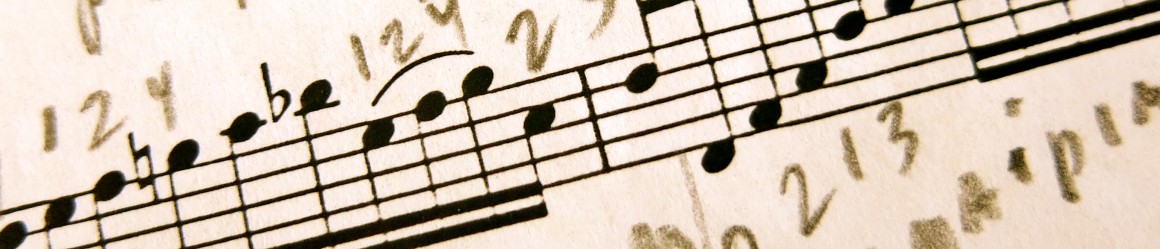
During a lesson last night, a musically talented young student played Roland Dyens’ Tango en Skai. He had played it a few years ago when he was 9 (!) and had been reworking it for fun. Like most young players excited about guitar, the desire to play is overwhelming to the point that it crowds out actual practice and more importantly, the crucial aspect of practice: reflection. A piece will get to a “pretty good” level and, while it may be pretty well played, it is not mastered or excellent. So, we addressed this by using the first run in Dyens’ Tango as an example of how to actually practice for marked improvement.

STEP 1 – PLAY RIGHT HAND ALONE SLOWLY
 This step is easy to spend the most time on because it will make you question right hand choices if you have not thought about them in this context. Actually seeing the open strings is different than seeing the original score and imagining the right hand. New patterns are optically sought out and if you are a visual learner, seeing a map is easier than imagining it. We chose to stick with the student’s right hand choice but it was interesting to watch such a talented player struggle to play it very slowly (sixteenth = 60 bpm). We lingered luxuriously in this stage playing at different tempi until we were convinced the right hand’s sense of rhythm and pulse had tightened up.
STEP 2 – PLAY RIGHT HAND ALONE WITH DYNAMICS

STEP 3 – SEARCH FOR STABILITY POINTS
We answered some key questions. Where is thumb? Working out when and where thumb plants on the strings between strokes or in anticipation of strokes greatly increases right hand stability for the rest of the fingers. Where can I plant other fingers? Because the right hand movement is continuously ascending towards string 1, planting helps control dynamics and insures that the fingers are in place before their turn is up. Then, of course, we spent time practicing the incorporation of planting into the right hand choreography. After a few minutes, the right hand was behaving like a true champ: strong, secure, comfortable, happy!

STEP 4 – ADD LEFT HAND BACK IN
This is where most students who are hyper-focused on left hand and playing are astonished by what they sound like. The playing sounds crisp, exact, musical, and free. Hopefully, at this stage, the aural and physical reward is strong enough to convince the student to start truly practicing and instill the desire to play everything at a level approaching mastery.
*We can go further here by applying rhythms, pushing the tempo to build a reserve, practicing left hand alone, but for now, this is where we left it.
STEP 5 – Take a new passage, and go to step 1!
Hope this helps!


 The image I hold while playing Heitor Villa-Lobos’ Etude Nº1 is one where I am sailing above the canopy of the amazon rainforest as if it were an endless gentle green ocean. Putting this image into practice presents many challenges for the guitarist but simply having an image helps to move the fingers smoothly and with little resistance. Commanding the right-hand to execute the arpeggio to comfortably create the waves of this amazonian ocean, the crescendos and decrescendos, requires some persistence, though. And to truly master the image, it is equally important to investigate how the left hand moves from harmony to harmony, how softly we transition from chord to chord, and how the right hand waxes and wanes over the strings. Ocean waves have an inherent softness to them. To approach this quality in both hands, I’ve brainstormed a bit to list some key tips that I’ve focused on over the years:
 times? This is the amount of times you would play it in the Etude before getting a break with the slurs.


