
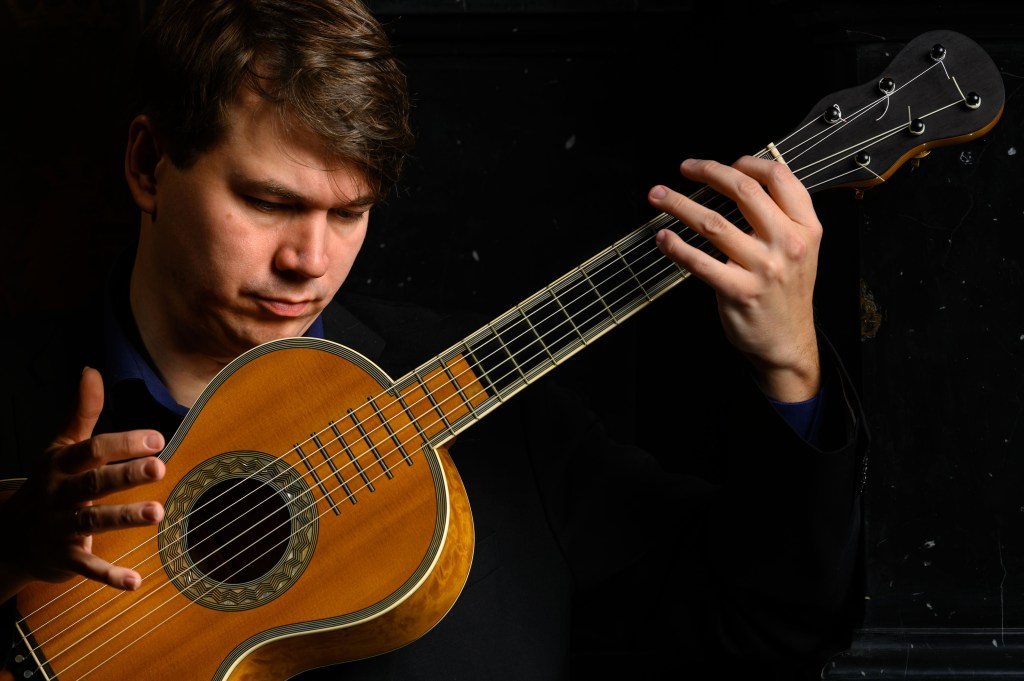
Hailing from Finland, guitarist virtuoso Patrik Kleemola recently sat down with Six String Journal to share some insight about his artistry and his journey with music. An active performer, educator, and chamber musician, Patrik is immersed in many projects, from recording whole cycles of etudes to concerts dedicated to one composer. His wonderful YouTube channel highlights his affinity for 19th century music; all performed on exquisite period instruments. His recordings of guitar repertoire across the centuries are wide-ranging though and are just as magically musical and engaging. Hope you enjoy this interview as much as I did.
PERSONAL
When did you start playing and why? Or, what drew you to the guitar initially?
There was my father’s semi-acoustic guitar in our house while I was growing up and before I entered for the guitar lessons in the city of Valkeakoski’s Music institute I knew some basic chords and how to play the main riff of Roy Orbison’s Pretty Woman. My grandfather from my mother’s side was in his youth an accordion player playing gigs professionally around the time of the 2nd World War and the war between Finland and Russia. Otherwise I’m the first professional musician in the family.
What repertoire do you enjoy playing the most?
To me probably the best thing in being “a classical musician” is the great variety of styles throughout the centuries and having a chance to dig in deep to the different styles, musical langueages and the culture. Whether it’s the French baroque style of Lully and De Visée, playing early romantic guitar repertoire by Sor and his contemporaries with an original Lacote guitar, playing Tárrega transcriptions of the great romantic piano literature or commissioning myself new pieces from contemporary composers, the great variety is the most rewarding thing.
What guitar or guitars do you perform on? Strings?
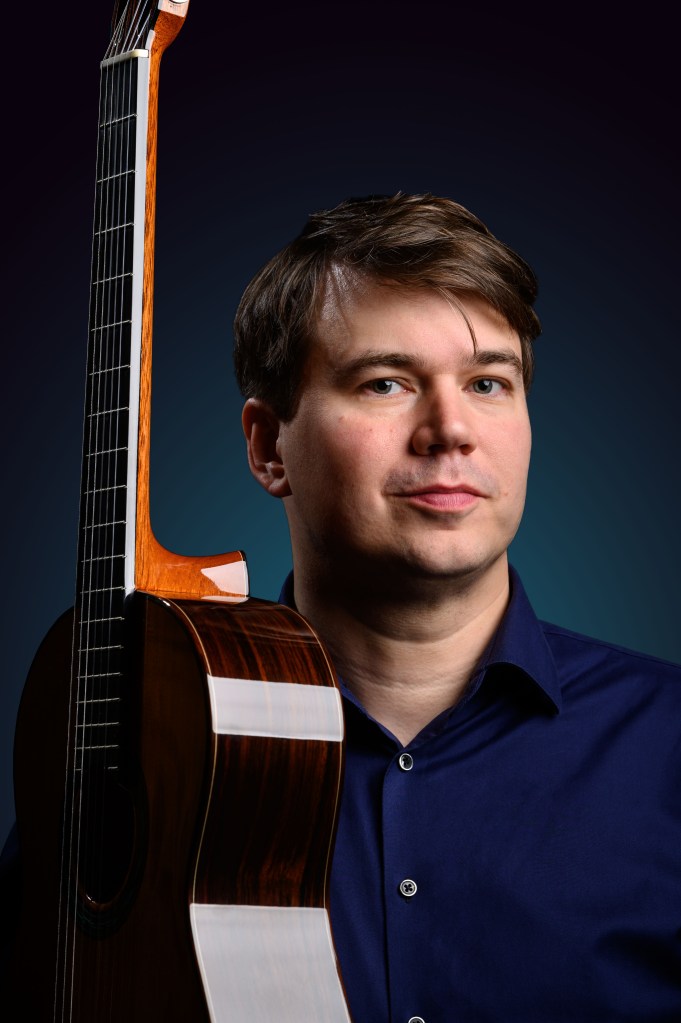
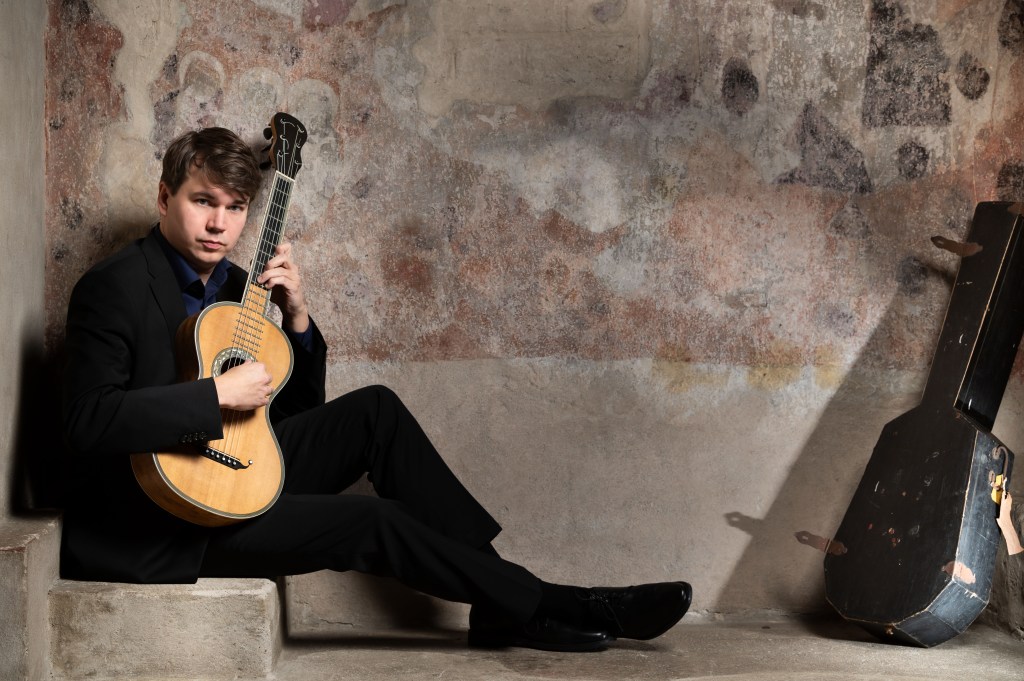
This past summer was a special one as I performed many concerts on an original René Lacote (1839) and Jose Luis Romanillos (1979). With Lacote I have done already some video recordings on my YouTube channel (more coming soon!) and I’m looking forward to do new recordings with Romanillos in 2025 and share those with followers of my channel. I also have played for ten years with a Rinaldo Vacca guitar made for me in 2014 and with this I have done many recordings and concerts. I have played a long time with Savarez strings and also have had a good experiences with Thomastik trebles which I use regularly. When playing with Lacote one has to be well aware of the maximum tensions of different strings in order to use them safely on the guitar. I usually use Ambra 800 by Aquila strings on my Lacote. I also try to experiment with gut strings but it’s challenging when playing with nails. However in the early 19th century many played with nails including Aguado, so it should be possible so I keep searching for the best gut strings that work with nail-playing.
Which guitarists/musicians have had the most influence on you?
In my early teens the Julian Bream’s Guitarra video series was a fascinating documentary on the history of the Spanish guitar with passionate and colourful performances by Bream through-out the series. Later on the many great pianists such as Arrau, Cherkassky and Lupu interpretating the incredible repertoire written for piano have been an inspiration. Although now as I have been more involved in the research of the early 19th century guitar repertoire, its technique and general approach, I have realized that the improvisational approach and ornamenting the repeats, for example, have been a vital part of the performance practice of the musicians at the time. In general these great pianists, as prime examples of the great musicians of the last century, didn’t dare to touch the “sacred texts” of the great composers. However this wasn’t the way Liszt, Hummel or Sor approached their performances in the early 19th century. I try get closer to this early 19th century tradition although I feel I’m still in the beginning of the journey.
What recording(s) are you most proud of?
There are two CD solo recital recordings that I did on the works that I commissioned from the Finnish and Italian composers Perchitarrasola (2012) and Through Green Glass (2015) by Pilfink Records and I’ve also been on other commercial recordings as well. The change in record business industry during the last decade have made me, and many other musicians, to think the reason to put out new commercial recordings. In the meanwhile I’ve released many video recordings on my
YouTube channel including series of pedagogic guitar literature including the complete set of Estudios sencillos by Leo Brouwer, 25 Studies by Carcassi, Sor studies op. 6 and op.35 and selection of 12 Studies by Aguado. During the COVID-19 period I did 18 works by Tárrega, a Baroque selection and rarely performed Sor masterpieces played on Louis Panormo (1838) guitar. I’ve done recordings of Sor duos with my former teacher Timo Korhonen. As an artist I think it’s important to document one’s activity (commercially or not) and the YouTube channel has now over 7000 subscribers so it has gained some following.
What are some up-and-coming projects (recordings, concerts) you are excited about?
I’m going to do more Sor recordings on my René Lacote (1839) and later on I will include also other composers from the period. Looking forward to record some of the great 20th century repertoire on the Romanillos in 2025. All these I will be released on the YouTube channel, free for everyone.
The past Autumn has been very hectic with concerts of different programs including solo recitals, chamber music with strings, Concerto by the great Finnish composer Mikko Heiniö for guitar and choir and premieres of contemporary music. Besides playing a lot in Finland I’ll be playing in Italy in December and returning there in March to play in Rome which follows concerts in Germany and Japan. There will be other concerts abroad as well to be confirmed so 2025 will be internationally quite active year for me.
I’m also going to start performing “Soirée Sor” concerts with my Lacote in 2025. Focusing a whole concert to just one composer will be an interesting challenge for me. I’ll be playing works by Fernando Sor from the early Spanish period to the last ones written in Paris. I’ll also talk about the incredible life of this fascinating composer which indeed had it’s dramatic turns, more than once.
TECHNIQUE AND PERFORMANCE
How much do you practice? And do you structure your practice in any particular way?
Some hours everyday, more or less. At the moment I’ve one year scholarship from the Finnish State so I have one year off from the Turku Conservatory where I work as a lecturer. This means I don’t have to teach so much, so I’ve even more time to expand my repertoire, be active on chamber music and playing concerts. I also try to give some time in my practice sessions to focus on refining the technique. There’s almost always some work I’ve commissioned from a composer so I’m active working with them which is very inspiring, trying to find out technical and musical solutions to textures that are not written by a guitarist.
Do you deliberately memorize music or have a technique that helps assimilate music into
memory?
I still strive to play pieces by heart when playing solo recitals although expecially with contemporary works the score is sometimes needed. I don’t trust just to the muscle memory when memorizings works. If I can play the whole piece in my head without the instrument (concentrating mostly to the left hand movements), I’m confident playing the work in public.
Have you published any editions or do you plan to publish your own editions in the future?
I’ve been very involved in the prepration of the published works that I’ve commissioned from the composers from the pedagogic literature to solo works, chamber music and concertos. If it’s pedagogic literature (like Etudes by Markku Klami, see the YouTube playlist) then it’s good to have more fingerings in the score. If it’s very demanding contemporary work, then it’s probably approached only by professionals and these cases the less is more when it comes to fingerings.
I have done arrangements of works by Tsaikovski, Sibelius, Satie, Bach and others. I’m thinking to publish these, hopefully soon, with video performances on my YouTube channel.
Do you have a favorite drill or set of exercises you use to warm up?
I have certain patterns for both hands taking from here and there that I do if I have just 20 minutes for warming up. If I have more time I might take some of the many technique books I have and do something from there just for the fun of it.
Do you have any pre-concert rituals?
The rest is very important so I try have good amount of sleep the night before. I like to have a proper warm-up session on the concert day. I might go through the program during the day, but very lightly and not necessarely all of it. Usually I try to work quite hard the day(s) before and then just let it happen on the concert day.
ADVICE TO YOUNGER PLAYERS
What single most important piece of advice about practicing would you offer to younger
aspiring players?
Playing guitar is work of a long-distance runner. The talent is not enough and it’s also a talent to be able to work consistently and regularly.
What repertoire do you consider essential for young/conservatory students to assimilate?
I think in the early 19th century repertoire there are the main technical things that one needs in playing the guitar. However from my experience as a teacher it’s not always the most inspiring material for the young students. Also reading music on the guitar is not the easiest task for young students and often this is also slowing things down. So good mixture of interesting repertoire from the classical tradition and new pedagogic literature that perhaps reflects more closely the music kids hear in their everyday life.
Are you accessible as a teacher?
I teach as a lecturer in the Turku Conservatory and I’m available also for lessons online, although the latter I have to do according to my schedules which varies quite a bit.
TANGENT
What is the last book that you read? Favorite author/s?
I just ended Madame Bovary by Gustave Flaubert. As I’ve been recently doing a research on Sor and the early 19th century guitar, it has inspired me to read a few books by the early 19th century French authors such as Balzac and Flaubert. Often music that I’m working open doors to choose the literature. Finnish composer Harri Suilamo wrote for me recently two guitar works inspired by the Austrian author Thomas Bernhard and I ended up reading a few books of this fascinating contemporary author.
What is your favorite way to spend time when not practicing?
Spending time with my family including our six-year-old son who is such an light of the day.







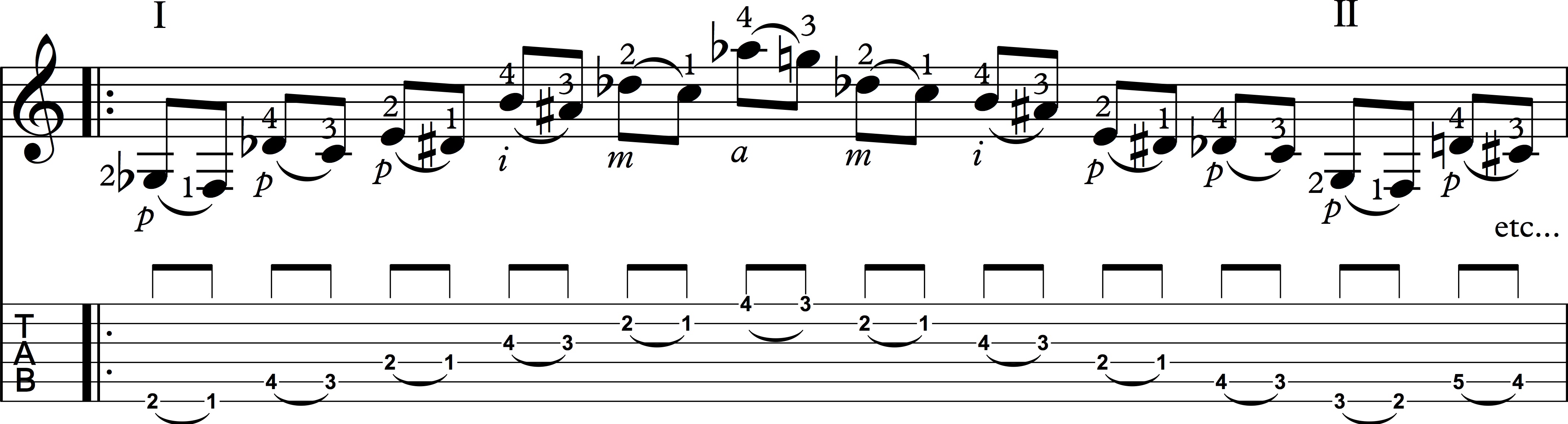
 My usual morning consists of a good warm-up (a combination of left hand movements and slurs, right hand alternation movements and arpeggios, and scales), before moving on to practicing spots in pieces, and finally playing through pieces and working on new pieces. However, there are periods of the year where I have more time to extend my technique practice and to learn new pieces. I’m approaching that period now (yeah!) so I’m experimenting with new finger gymnastics to address weaknesses in my technique and building a hearty list of new repertoire to absorb over the summer.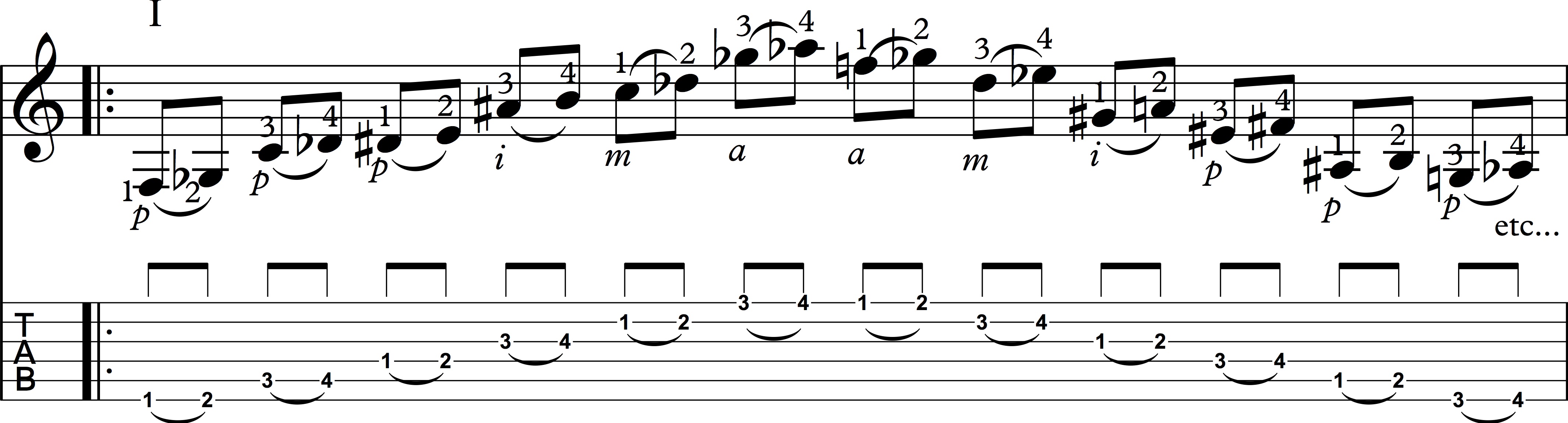


 Six String Journal