Studio Content
This content is restricted to Six String Journal Studio Members only. Join for access.
Tag: guitar video
Artist Profile: Denis Azabagic
“Denis Azabagic demonstrated his unbelievable guitar playing skills, sincere love for music, professionalism and passion…” – CHICAGOTRIBUNE.COM
A GFA winner, seasoned concert artist, accomplished chamber musician and recording artist, Bosnian guitar great Denis Azabagic, needs no introduction to the classical guitar world. But, what often escapes even the most devoted afficionados may be the hidden gems among the pile of guitar videos on youtube.
I recently came across Denis’ Mastering Guitar Technique Series [scroll down a bit after linking]. Though you have to pay for each video, the lessons range from slurs to tremolo to scales and in my opinion are worth hundreds time what he is charging ($1.99!). Each video has a tremendous amount of insight and practical advice. If you’ve not heard Denis play, check out the video below of him playing brilliant renditions of standards by Sor, Bach, and Asencio, and then check out his technique series!
Slow Practice
I often try to convince students to practice ultra slowly by using various metaphors. How much more would you notice if you were to admire a great piece of art for an hour instead of a minute? How would your thoughts change if you read a complex paragraph quickly versus reading it slowly and contemplating the meaning of each word and sentence as it related to the whole? If metaphors don’t convince them they can go read this fabulous article for pianists written by pianist Graham Fitch about the slow practice that I think is spot on!
Hope you enjoy it as much as I did.
Technical Workout for Classical Guitar – Level 1 – Base Building, Part 1 (video)
Here is the first of Six String Journal’s series of technique videos to accompany my recent workbook, A Technical Workout for Classical Guitar, Level 1 – Base Building. This video corresponds to Left Hand Movements, Part 1.
This workbook is designed to help late beginners and intermediate guitarists develop a daily routine of movements to strengthen their technical base so that fingers can do their job properly when assimilating new repertoire (that was wordy!). Always go slowly with the most control possible. Think of it as writing a program for your brain with no bugs.
Building Scale Speed
Studio Content
This content is restricted to Six String Journal Studio Members only. Join for access.
Ricardo Gallén on Technique
I just came across some newly posted videos of Spanish guitarist extraordinaire, Ricardo Gallén, performing Leo Brouwer’s Sonata Nº4 Sonata del Pensador. The piece is dedicated to Ricardo and whether or not this is the premier or not, it is a fabulous performance.
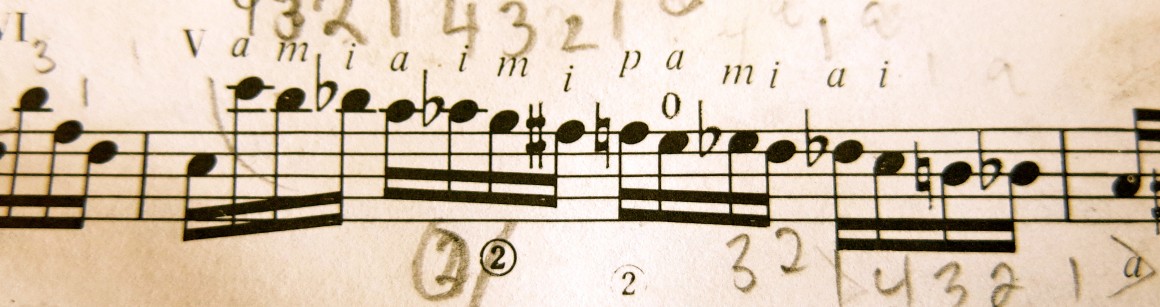
Then, as often happens, I find myself watching more videos than I really have time for. There is too much to learn. In the next video, Ricardo gives a masterclass with demonstrations and a tremendous amount of insight. Some of the topics he discusses relate to using percussive practice in the left hand when playing fast, drawing on the metaphor of the difference between walking and running. When we walk, our feet plant fully as we balance to lift and take the next step. When we run, we are pounding lightly a bit more percussively. Translated back to guitar, if the left hand holds down and luxuriates on the fret, energy is lost and tempo slows. Ricardo plays an excerpt of Villa-Lobos Etude Nº2 to demonstrate (around minute 17). The key point is that because the left hand is acting more percussively when playing fast, part of the sound comes from the left hand, so that the right hand can relax, aiding in speed.
Another point he makes (around minute 19) is the unbalanced nature of playing guitar. Instinctually our hands want to act together (thought on this in a recent post about neural coupling), squeeze together, let go together. When playing softly or piano in the left hand but the right hand plays loudly or forte we must practice compensating for the discrepancy in energy between both hands. These are brilliant points to ponder. Undoubtably, there are more insights but I’m dying to go practice…
Yuri Liberzon – Technique
Studio Content
This content is restricted to Six String Journal Studio Members only. Join for access.
Marcin Dylla and Carcassi Etude 7
I just stumbled across this video of phenomenal guitarist Marcin Dylla talking about Carcassi’s Etude 7. The real treat for students is that he plays it at the end of the video and manages to raise it from the status of a mere etude to a mini-masterpiece.